Lash Training in Christchurch: How to Choose the Right Course
If you’re looking for lash training in Christchurch, choosing the right course can feel surprisingly difficult.
There are online courses, group classes, private training, short workshops and longer programmes. Prices can vary considerably, and two courses described as “beginner lash training” may offer very different levels of practical experience and support.
I’ve worked in the New Zealand lash industry for more than 12 years and have been training lash students for around eight years. One thing I’ve learned is that the best course isn’t necessarily the cheapest, the longest or the one with the biggest kit.
What matters is whether the training gives you the technical foundations, practical experience and support you need to become a safe and confident lash technician.
If you’re comparing lash courses in Christchurch, here’s what I would look at before enrolling.
What Should a Beginner Lash Course Teach You?
A beginner lash course should teach much more than how to pick up an extension and attach it to a natural lash.
You need to understand the foundations behind the application.
That includes natural lash growth, hygiene, client consultation, eye preparation, isolation, correct placement, adhesive control, lash direction, styling, safe lengths and weights, infills, removal and aftercare.
You should also understand what poor application looks like and how it can affect the natural lashes.
These foundations matter because once you begin practising independently, you need to understand not only how to apply lashes but why you’re making each decision.
Should Beginners Learn Classic Lashes First?
I believe Classic lashes provide an important foundation for beginners.
Classic application teaches you to isolate one natural lash and place one extension correctly. That helps develop the control you’ll later use for more advanced techniques.
Once those foundations are developing, you can progress into techniques such as Hybrid and Volume.
In my own beginner training, I teach Classic, Hybrid and Premade Volume. This gives students a progression from fundamental one-to-one application into styles they’re likely to encounter when working with real clients.
Learning more techniques is useful, but the number of techniques listed on a course page shouldn’t be the main reason you choose a course.
Strong foundations are more valuable than rushing through ten different lash styles.
Online or In-Person Lash Training in Christchurch?
Both formats can work, but they offer different advantages.
Online training gives you flexibility. You can study theory at your own pace, replay demonstrations and return to lessons whenever you need them.
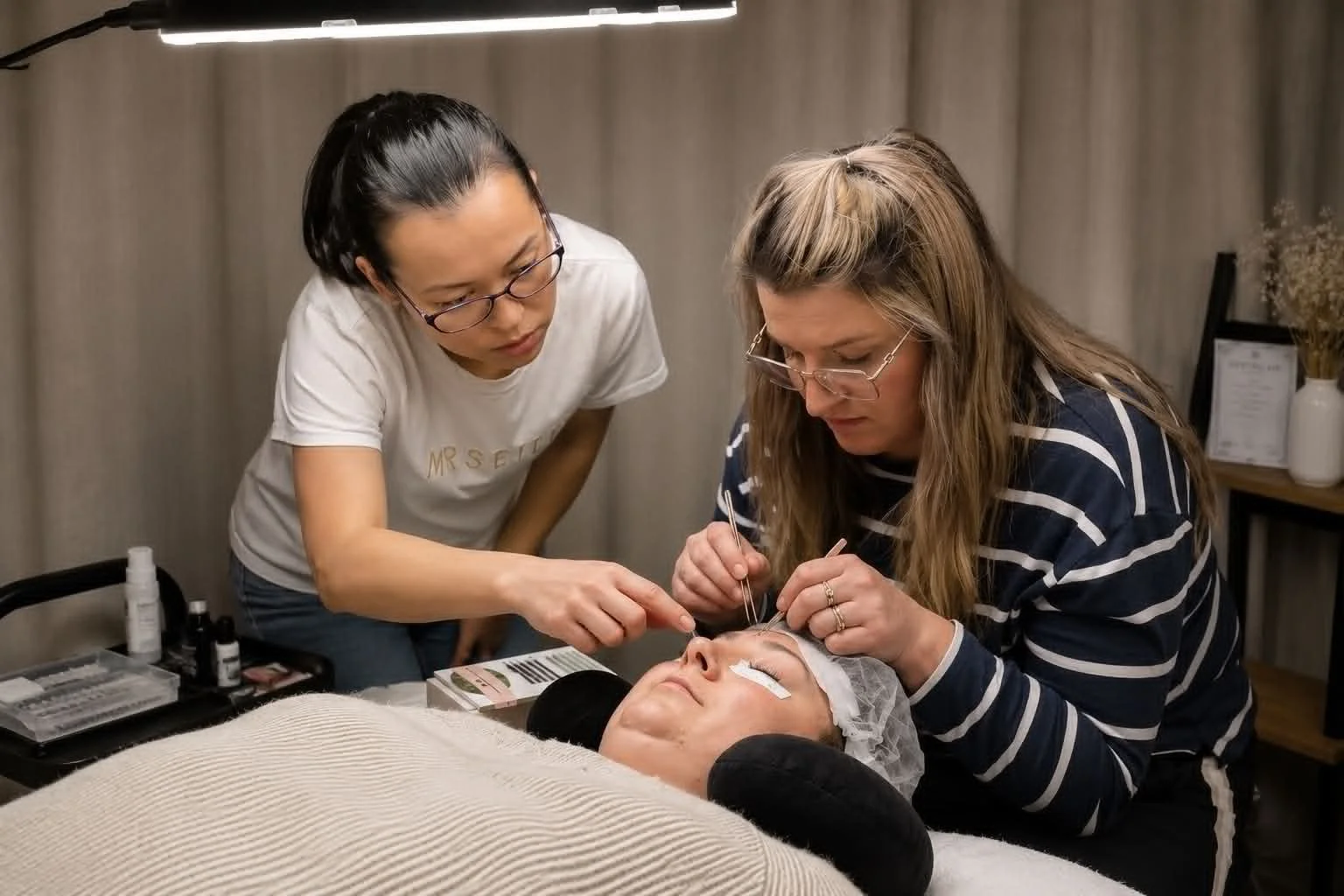
In-person training gives you something different: an educator can watch how you work, correct your hand position, look at your isolation and placement, and help troubleshoot problems as they happen.
For some students, combining the two works particularly well.
My private lash training in Christchurch uses online theory alongside practical one-to-one sessions. Students can learn and revisit the theory independently, while our time together can focus heavily on practical application.
If travelling to Christchurch isn’t practical, my Online Lash Course is designed to allow beginners to learn remotely with personal support.
Private vs Group Lash Training: Which Is Better?
Group training can be a good option for students who enjoy learning alongside other people.
Private training offers a different experience.
When I teach one student at a time, I can watch exactly what that student is doing and adjust the training around the areas she finds difficult.
One beginner might struggle with isolation. Another may understand isolation quickly but find adhesive control difficult. Someone else may need more help with direction or positioning.
With one-to-one training, you don’t have to move on because the rest of the class is ready.
For beginners who want individual attention, private training can be particularly valuable.
That doesn’t make group training automatically inferior. The important question is how much direct feedback and practical support you’ll actually receive.
How Much Practical Training Should a Lash Course Include?
Watching someone apply lashes and applying them yourself are completely different things.
You can understand a demonstration perfectly and still find the technique difficult when the tweezers are in your own hands.
That’s normal.
Lash application requires fine motor control, and those movements develop through repetition.
If you’re considering in-person lash training, ask what practical work is included.
Will you work on a mannequin, practice lashes or a live model? How much time will you actually spend applying lashes? Will the educator watch and correct your technique?
In my private Christchurch training, practical sessions include live model work because eventually you need to become comfortable working with real natural lashes, different eye shapes and the realities of an actual appointment.
Does the Experience of Your Lash Educator Matter?
I think it matters enormously.
Being able to perform a lash treatment and being able to teach someone else how to perform it are two different skills.
Look at how long the educator has actually worked with clients, how long they’ve been teaching and whether their own work reflects the standard you would like to achieve.
Also look beyond follower numbers.
A large social media following doesn’t automatically mean someone is an experienced educator.
I’ve worked with lash clients in New Zealand for more than 12 years and have trained more than 50 students. That experience affects the way I teach because I’m not explaining techniques only from theory. I’ve dealt with different natural lashes, eye shapes, retention problems, client expectations and the realities of running a lash business.
First-hand industry experience is something I would actively look for when choosing an educator.
Should You Look at the Educator’s Lash Work?
Absolutely.
Before enrolling, look carefully at the educator’s portfolio.
Do you like the finished results? Does the work look clean and consistent? Can you see examples on different clients rather than only one style photographed repeatedly?
If you want to create natural, customised lash sets, it makes sense to learn from someone whose work reflects that style.
Likewise, if your goal is very dramatic or specialised lash work, you may prefer an educator who specialises in that area.
Training isn’t only about receiving information. You’re also learning how your educator approaches lash design and application.
Choose someone whose work you respect.
What Should Be Included in a Lash Training Kit?

A large kit can look impressive in a course advertisement, but quantity doesn’t necessarily equal value.
A beginner needs professional products that allow her to practise what she has learned.
That may include lash trays, adhesive, isolation and application tweezers, eye pads, tape, cleanser, adhesive accessories and other essential supplies.
Look at what is actually included rather than focusing only on the advertised value of the kit.
Will you genuinely use those products after training?
My private one-to-one lash training includes a professional kit valued at approximately NZ$500 so students have the essential tools and products needed to continue practising after the practical training.
My online students can also choose an optional beginner starter kit if they want the convenience of having the core products selected for them.
How Much Does Lash Training Cost in Christchurch?
Lash training prices vary depending on the format, duration, educator, practical training, kit and ongoing support included.
A short group class will naturally have a different price structure from several private one-to-one sessions.
An online course may cost considerably less because it doesn’t require the same amount of individual in-person teaching time.
Rather than comparing courses only by price, compare what you actually receive.
Ask yourself how much practical training is included, whether products are provided, how much access you have to the educator and what happens when you need help after the course.
I’ve also written a detailed guide explaining how much lash courses cost in New Zealand if you want to compare online and in-person training in more detail.
Is the Cheapest Lash Course a Good Idea?
Sometimes a lower-priced course can provide excellent education, and an expensive course isn’t automatically better.
Price alone tells you very little.
The problem comes when price becomes your only deciding factor.
If one course costs less but provides minimal practical feedback, limited support or weak training materials, saving money initially may not provide better value.
At the same time, you shouldn’t assume you need to spend thousands of dollars just to begin learning.
Compare the educator, curriculum, support, practical experience and what is included.
Choose based on value rather than simply choosing the lowest or highest number.
What Support Should You Get After Lash Training?
This is one of the things I would pay particular attention to.
Most beginners don’t encounter all their questions during the course itself.
The questions often appear later when they start practising alone.
Why are my lashes sticking together? Why is my adhesive behaving differently today? Why is my placement inconsistent? Why did this model lose more extensions than the previous one?
That’s when access to an experienced educator can become extremely useful.
Before enrolling, ask what happens after the training finishes.
Is there ongoing support? Can you send photos of your work? Can you ask questions while practising?
A course shouldn’t necessarily end the moment the scheduled training hours are over.
Does a Lash Certificate Mean You’re Ready for Clients?
A certificate shows that you’ve completed the requirements of a particular course. It doesn’t automatically mean you’ve become an experienced lash technician overnight.
There is still a practice period.
After training, you need to repeat the techniques until isolation, placement, direction and adhesive control become increasingly consistent.
Some students develop confidence quickly. Others need considerably more practice.
That’s completely normal.
I would never judge your readiness for paying clients purely by whether you have a certificate in your hand.
Your work needs to be safe, comfortable and consistent enough for you to provide a professional service.
Do You Need an Accredited Lash Course in NZ?
You may see terms such as “accredited”, “certified” and “recognised” used when lash courses are advertised.
Don’t assume those words all mean the same thing.
If accreditation is important to you, ask exactly who has accredited the course, what that accreditation represents and whether it matters for your particular goals.
Likewise, if you receive a certificate, understand what type of certificate it is.
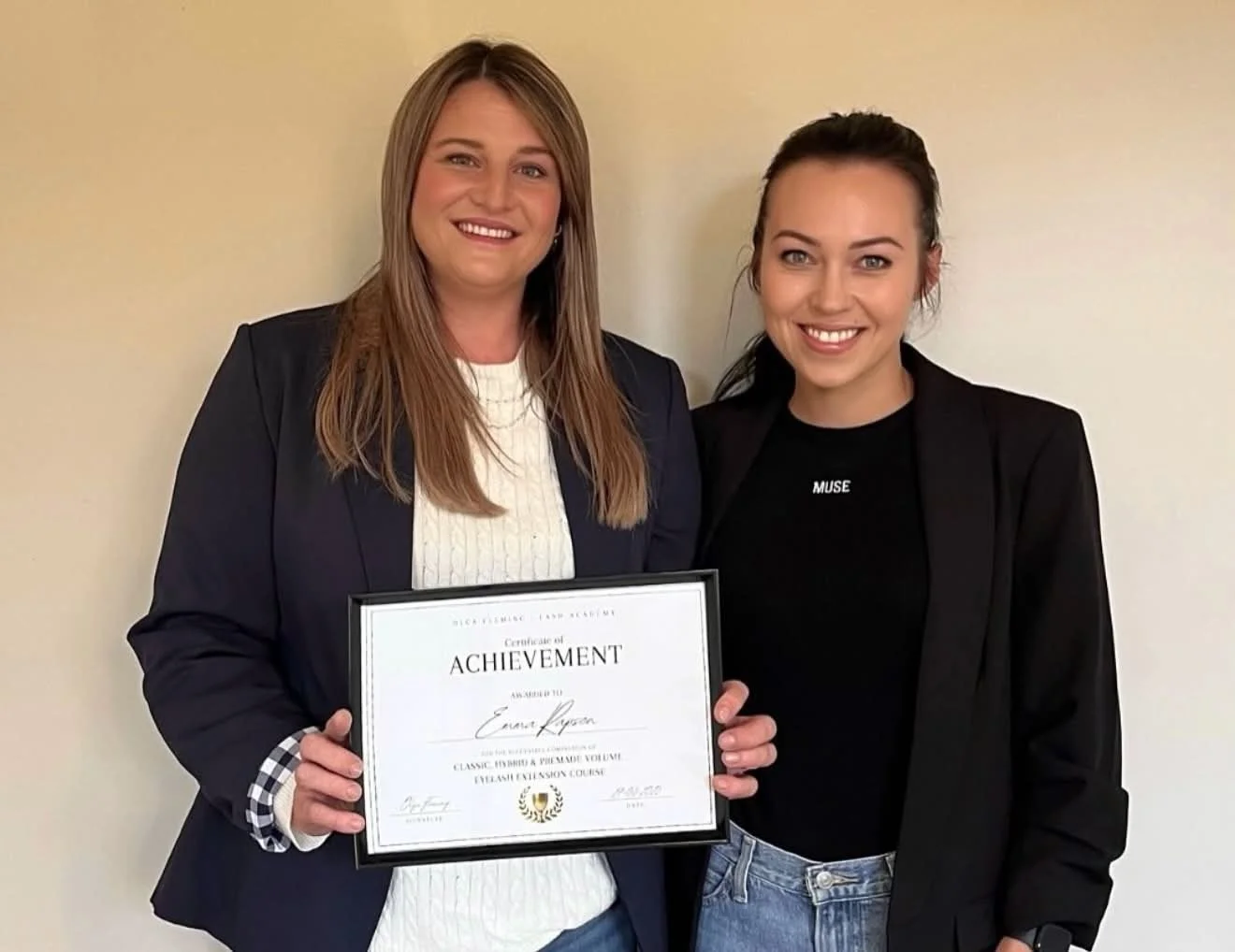
My courses provide a Certificate of Completion. I prefer to be clear about what students are receiving rather than using terminology that could imply something different.
We’ll explore accreditation and lash certification in much more detail elsewhere in this guide series because it’s an area where beginners understandably have a lot of questions.
Can You Learn Lashes With No Beauty Experience?
Yes, many people begin lash training without previous beauty industry experience.
You don’t need to arrive already knowing how to hold lash tweezers or isolate natural lashes.
That’s what beginner training is for.
What matters more is patience, willingness to practise and attention to detail.
Lash application can feel awkward initially because you’re asking your hands to perform tiny, precise movements they’ve never performed before.
Don’t compare your first model with an educator who has spent thousands of hours working with lashes.
The goal of your first course is to build the foundation from which those skills can develop.
Should You Choose a Lash Course Close to Home?
Location matters, particularly for practical training.
If you’re travelling across Christchurch for several sessions, think about whether the schedule realistically works for you.
But I wouldn’t choose a course purely because it happens to be five minutes closer.
The educator and training structure matter much more.
My private lash training is based in Bryndwr, Christchurch, and students attend practical sessions at my home studio.
For students elsewhere in Christchurch, Canterbury or New Zealand who don’t want to travel for practical sessions, online training can be a more flexible alternative.
What Questions Should You Ask Before Booking Lash Training?
Before paying a deposit, make sure you understand exactly what you’re buying.
Ask what techniques are taught, how the training is delivered, how much practical work is included and whether you’ll work on live models.
Check whether a kit is included and what it contains.
Ask what support is available afterwards, how long you can access online material and what certificate you receive.
You should also understand the total price and payment terms before committing.
A professional educator should be comfortable answering those questions.
Red Flags to Watch for When Choosing a Lash Course
Be cautious of courses that promise unrealistic results.
No educator can genuinely guarantee that you’ll immediately earn a particular income, become fully booked or master lashes in a few hours.
Be wary if it’s difficult to find examples of the educator’s own lash work or student results.
I’d also question training that focuses heavily on receiving a certificate while barely discussing practice afterwards.
A certificate can be meaningful, but the actual skill you develop is what your future clients will experience.
How Do You Know Which Lash Course Is Right for You?
Start with the way you learn best.
If you’re independent, comfortable learning through video and need flexibility, online training may suit you extremely well.
If you prefer someone beside you correcting your technique in real time, practical training may be worth the additional investment.
If you want both, look for training that combines online learning with hands-on sessions.
Then look at the educator.
Do you trust their experience? Do you like their work? Does the course clearly explain what you’ll learn? Is there support after training?
Those questions matter more than flashy marketing.
My Advice After 12+ Years in the Lash Industry
Don’t choose your first lash course based only on price, kit size or how quickly you can receive a certificate.
Choose the training that gives you the strongest chance of actually developing the skill.
I’ve worked as a lash technician in New Zealand for more than 12 years and have been training students for around eight years. The students who progress best aren’t necessarily the ones who find everything easy immediately.
They’re the ones who understand the foundations, practise consistently, ask questions and keep improving.
If you’re looking specifically for lash training in Christchurch, my private one-to-one training combines online theory with four practical sessions, live model work, a professional starter kit, a Certificate of Completion and ongoing support.
If you prefer to learn entirely from home, my Online Lash Course teaches Classic, Hybrid and Premade Volume step by step, with lifetime access and personal support.
The right lash course should do more than give you information. It should give you a foundation you can continue building on long after the training itself has finished.
