What Does a Beginner Lash Course Actually Teach You?
If you’re thinking about becoming a lash technician, you may be wondering what you actually learn during a beginner lash course. Is it mainly about applying extensions, or is there much more involved?
A good beginner course should teach you much more than how to attach a lash extension. Before you begin working with clients, you need to understand natural lash health, hygiene, isolation, adhesive control, safe placement, styling, removal, aftercare and many other practical skills.
After more than 12 years working as a lash artist and 8 years training lash students, I’ve found that strong foundations make a huge difference to how confidently beginners progress. Learning the correct technique from the beginning can also prevent habits that become much harder to fix later.
In this guide, I’ll explain what a comprehensive beginner lash course should teach you, what practical skills you can expect to learn and what to look for when comparing different training options.
What Should a Beginner Lash Course Teach You?
A comprehensive beginner lash course should teach you both the theory behind eyelash extensions and the practical skills needed to apply them safely.
You should learn how natural lashes grow, how to protect their health and how to choose extensions that are appropriate for each client. Your training should also cover hygiene, client preparation, isolation, correct placement, adhesive control, styling, safe removal and aftercare.
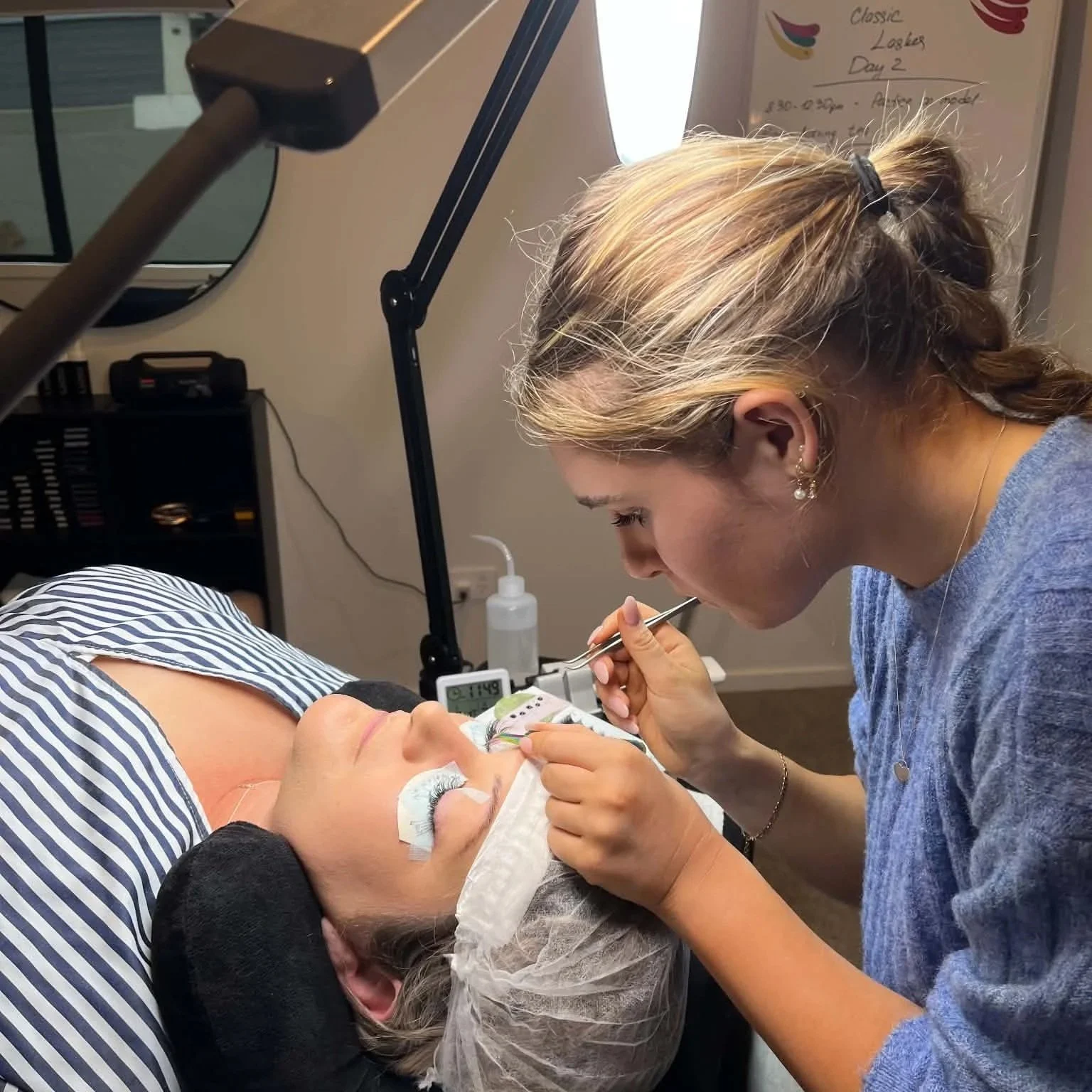
The practical side is equally important. You need to learn how to hold and control your tweezers, isolate individual natural lashes and attach extensions accurately without creating stickies or placing them too close to the eyelid.
A beginner course doesn’t need to teach every advanced technique in the lash industry. Its job is to give you strong foundations that you can build on as your experience and confidence grow.
Why Do You Need to Learn About Natural Lash Health?
Before learning how to apply extensions, you need to understand the natural lashes you’re working with. Every client has different lash density, strength, length and growth patterns, and your extension choices should take those differences into account.
Beginner training should teach you about the natural lash growth cycle and why individual lashes can be at different stages of growth. This helps you understand normal shedding and why extensions naturally fall out over time.
You should also learn how to choose appropriate extension lengths and thicknesses. Applying lashes that are unnecessarily long or heavy can put additional stress on the natural lashes.
As a lash technician, your goal isn’t simply to create a beautiful set. You should be able to customise the application while protecting the health of your client’s natural lashes.
Why Is Isolation So Important in Lash Extensions?
Isolation is one of the most important skills you’ll learn as a beginner lash technician. It means separating one natural lash from the surrounding lashes before attaching an extension to it.
Because natural lashes grow and shed independently, extensions shouldn’t accidentally connect neighbouring natural lashes together. When several lashes become stuck together, often called “stickies”, they can pull against each other as they grow and may cause discomfort or unnecessary stress on the natural lashes.
Good isolation takes time to master. In the beginning, controlling two tweezers while working with very small natural lashes can feel difficult, but it becomes much easier with regular practice.
I always encourage beginners to prioritise clean isolation over speed. A slower set with careful isolation gives you a much better foundation than trying to finish quickly while creating stickies.
How Do You Learn Correct Lash Placement?
Correct placement is another essential skill in beginner lash training. An extension needs to be attached securely to the natural lash while maintaining an appropriate distance from the eyelid.
If an extension is placed too close to the skin, it can cause discomfort or irritation. If the attachment is poor or only a small part of the extension is connected to the natural lash, retention may also suffer.
You’ll also learn to control the direction of each extension. Good direction helps create a clean, balanced lash set rather than lashes pointing in different directions.
Placement can look simple when you watch an experienced lash artist, but developing consistent attachment takes practice. Focus on accuracy first, then allow your speed to improve naturally as the movement becomes more familiar.
What Should You Learn About Lash Adhesive?
Lash adhesive is one of the most important products you’ll work with, so beginner training should teach you how to use it correctly rather than simply telling you which glue to buy.
You should learn how environmental conditions such as temperature and humidity can affect the way your adhesive performs, as well as how much adhesive to use and how to create a clean attachment to the natural lash.
Your course should also explain correct adhesive storage, replacement and safe working practices. Using too much adhesive can create bulky attachments and stickies, while using too little or working incorrectly with your adhesive can contribute to poor retention.
Adhesive control improves with experience, so don’t expect to master it immediately. Understanding how your product behaves and learning to adjust your technique is an important part of becoming a confident lash technician.
What Lash Curls, Lengths and Thicknesses Should Beginners Learn?
Choosing the right extension is an important part of creating a safe and flattering lash set. Beginner training should teach you how lash curls, lengths and thicknesses affect both the finished look and the natural lashes underneath.
Different curls can create very different effects depending on the client’s natural lash direction and eye shape. You should also learn how to choose lengths that suit the natural lashes rather than automatically using longer extensions because a client wants a dramatic result.
Thickness and weight are especially important for natural lash health. Extensions should be selected with the strength of the natural lashes in mind, and different techniques may require different diameters.
Instead of memorising one lash map or using the same extensions on every client, your training should help you understand how to make safe choices and customise each set.
What Is Lash Mapping and Styling?
Lash mapping is the plan you create for where different extension lengths will be placed across the eye. It helps you create a balanced shape rather than choosing lengths randomly as you work.
Beginner training should teach you how different lash styles can change the appearance of the eyes and why the same map won’t necessarily suit every client. Eye shape, natural lash direction, eyelid structure and the client’s preferred result can all influence your styling choices.
You’ll usually begin with relatively simple maps and learn how to create looks such as natural, open-eye or cat-eye styles. As your experience grows, you can make your styling much more customised.
The goal for a beginner isn’t to memorise dozens of complicated lash maps. It’s to understand the basic principles of styling so you can make thoughtful choices for each client.

Should a Beginner Learn Classic, Hybrid and Volume Lashes?
Classic lashes are usually the best place to begin because they teach you the fundamental skills of isolation, placement, direction and adhesive control. With Classic application, one extension is applied to one natural lash, making it easier to focus on developing clean technique.
Once those foundations are becoming consistent, you can start learning how to create fuller effects. Hybrid lashes combine Classic extensions with volume fans, while Volume techniques use multiple lightweight extensions to create additional fullness.
In my beginner training, I teach Classic, Hybrid and Premade Volume because this gives students a useful range of techniques without making the learning process unnecessarily complicated.
You don’t need to master every advanced lash style immediately. Build strong foundations first, then expand your skills as your confidence and experience grow.
What Hygiene and Safety Should a Beginner Lash Course Cover?
Hygiene and safety should be part of your training from the very beginning. You’re working close to the eyes and using tools and products on multiple clients, so clean working practices are essential.
Your course should teach you how to prepare your workspace, clean and disinfect reusable tools appropriately, use disposable items correctly and maintain good hand hygiene before and during appointments.
You should also learn how to prepare the eye area safely, protect the lower lashes and recognise situations where a lash treatment may need to be postponed or avoided.
These parts of lash training may not seem as exciting as learning new styles, but they’re part of providing a professional service. Beautiful lashes should never come at the expense of client safety.
What Should You Learn About Client Consultations?
A professional lash appointment starts before you pick up your tweezers. Beginner training should teach you how to talk with clients about the result they want while also considering what is suitable for their natural lashes.
You should learn to ask about relevant sensitivities, previous experiences with eyelash extensions and anything else that may affect whether or how you provide the service. You’ll also need to explain realistic expectations around the finished look, maintenance and retention.
Consultation is also where you can discuss styling. A client may show you an inspiration photo, but their natural lashes and eye shape may be completely different from the person in the image. Part of your job is knowing how to adapt the idea safely.
Good consultation skills help you create a result your client is happy with while maintaining professional boundaries and making decisions based on the health of their natural lashes.
Should a Beginner Lash Course Teach Lash Removal?
Yes. Safe removal is an essential skill for every lash technician and should be included in beginner training.
You need to understand how to remove extensions without pulling, picking or putting unnecessary stress on the natural lashes. Your training should explain how professional remover is used, how to protect the eye area and how to make sure the product is completely removed before the client opens their eyes.
You should also learn the difference between removing a full set and carefully removing individual extensions during a maintenance appointment.
Clients may come to you with lashes applied elsewhere, poor retention or extensions that need to be removed for another reason. Knowing how to handle removal safely is just as important as knowing how to apply a new set.
What Should You Learn About Lash Aftercare?
Your responsibility as a lash technician doesn’t end when the appointment is finished. Beginner training should also teach you how to explain correct aftercare to your clients.
Clients need to understand how to keep their lashes clean, how to brush them properly and which habits may affect their extensions or retention. Clear aftercare advice can also help clients recognise normal natural lash shedding rather than assuming that every lost extension means something has gone wrong.
You should also explain why regular maintenance appointments are needed as the natural lashes continue through their growth cycle.
Good aftercare education benefits both you and your client. It helps protect natural lash health, supports better retention and gives clients realistic expectations about looking after their extensions between appointments.
How Do You Learn to Work on Different Clients and Eye Shapes?
One of the biggest differences between practising and working professionally is that every client is different. Natural lash density, direction, strength, eye shape and personal preferences can all change how you approach a lash set.
Beginner training should teach you how to assess what you’re working with rather than expecting one technique or lash map to suit everyone.
As you practise on different models, you’ll learn how to adjust your placement, lengths, curls and styling to create a result that suits the individual client while remaining appropriate for their natural lashes.
This is why practical experience is so valuable. The more variety you work with during your learning stage, the better prepared you’ll be when you eventually begin taking paying clients.
How Much Practice Do You Need After a Beginner Lash Course?
Completing your beginner course is the start of learning, not the point where your technique is suddenly finished. Most beginners need regular practice afterwards to turn what they’ve learned into consistent practical skills.
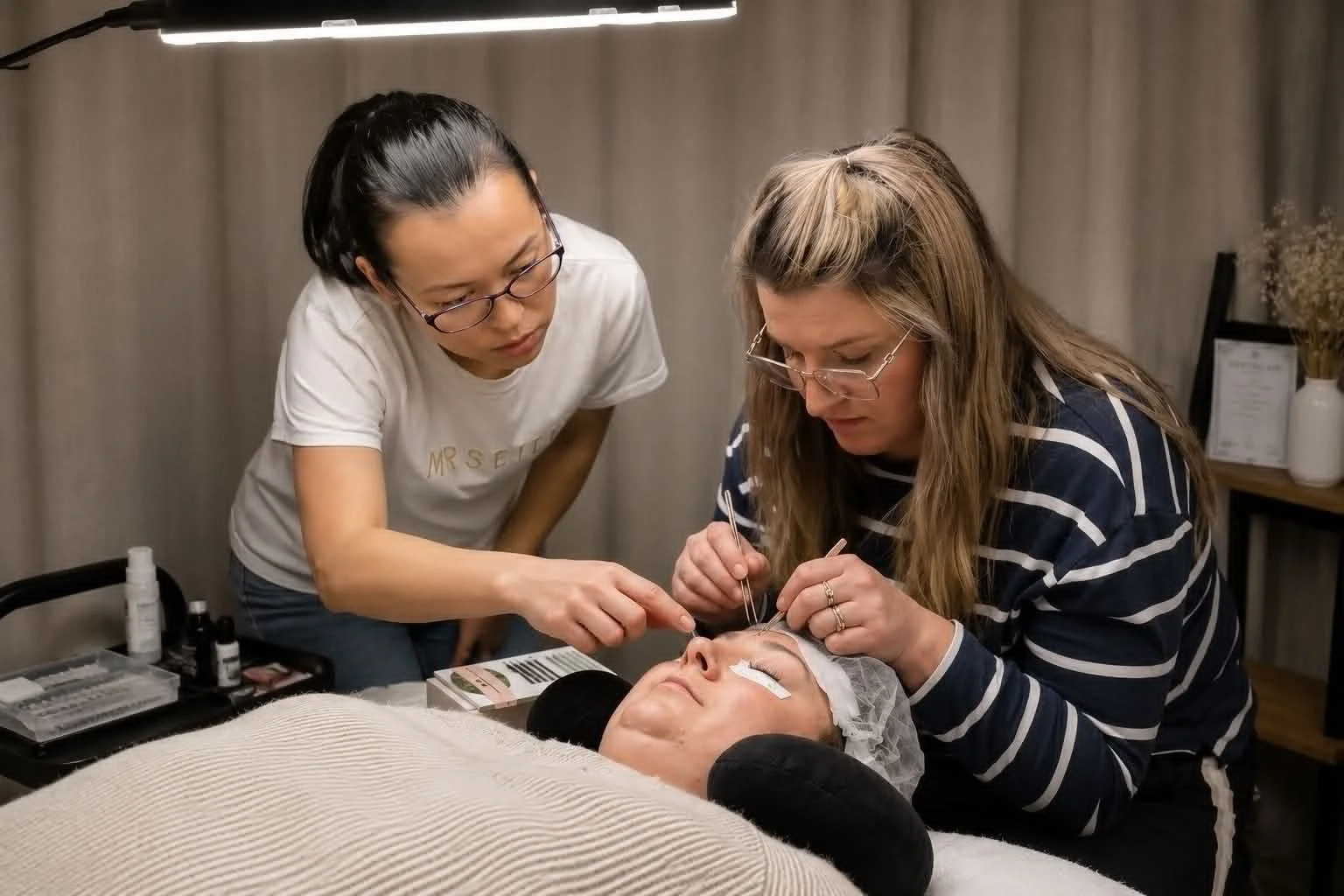
Try to practise on different models rather than repeatedly working on the same person. Different natural lash densities, directions and eye shapes will challenge you in different ways and help you become more adaptable.
Your early sets may take several hours, and that’s completely normal. Focus on isolation, placement, direction and adhesive control before worrying about speed.
Take clear photos of your work and ask your educator for feedback when possible. Small corrections early in your learning can prevent you from repeatedly practising the same mistake.
The goal isn’t to complete a certain number of sets as quickly as possible. It’s to reach a point where your application is safe, clean and consistent enough to begin working confidently with clients.
How Do You Know If a Beginner Lash Course Is Good Quality?
A good beginner lash course should give you enough knowledge and support to build safe, professional foundations rather than simply helping you complete lessons and receive a certificate.
Look closely at the course curriculum. It should cover natural lash health, hygiene, isolation, placement, adhesive control, styling, safe removal, aftercare and the practical skills you’ll actually use when working with clients.
The educator’s experience is important too. Look at their own work, how long they’ve been in the industry, their experience training students and whether you’ll be able to ask questions or receive feedback while you practise.
Also consider how the course is delivered. Clear demonstrations that you can revisit can be extremely useful when you’re learning a detailed technique, especially if you’re studying online.
Most importantly, choose training that focuses on developing your skills rather than promising that you’ll become a professional lash technician simply by completing a course quickly.
What Should Happen After You Finish Your Beginner Lash Course?
Finishing your course doesn’t mean your learning is over. It means you now have the knowledge and techniques you need to begin developing your skills through regular practice.
After training, focus on working with models and improving one area at a time. Your isolation, placement, direction, adhesive control and timing should gradually become more consistent as you complete more sets.
This is also when access to your educator can be especially valuable. Questions often appear once you start practising independently, so being able to ask for advice or receive feedback on your work can help you understand what needs improving.
Don’t rush to take paying clients simply because you’ve received your certificate. Give yourself time to practise until your application is safe and consistent.
Your beginner course gives you the foundation, but the lash technician you become afterwards is built through practice, feedback and experience.
Is Online Lash Training Enough for a Complete Beginner?
Yes, online lash training can work well for complete beginners when the course is comprehensive and you’re prepared to practise independently.
One advantage of learning online is that you can replay demonstrations as many times as you need. Lash application involves very small, precise movements, so being able to pause a lesson, practise the technique and then watch it again can be extremely useful.
However, an online course shouldn’t simply give you access to videos and leave you completely on your own. Look for training that provides clear theory, detailed demonstrations and access to support when questions come up during your practice.
The format of your training matters less than what you actually learn and how much effort you put into developing your practical skills afterwards. Whether you train online or in person, regular practice is what turns the techniques you’ve learned into confident lash application.
What Does My Beginner Online Lash Course Teach?
My Online Lash Course is designed to take complete beginners through the foundations of eyelash extensions step by step.
The course covers the essential theory behind safe lash application as well as practical demonstrations you can watch and revisit whenever you need them. You’ll learn Classic lash application first, then progress to Hybrid and Premade Volume techniques so you can offer several popular services as your skills develop.
I also teach the areas that make a big difference to your everyday work as a lash technician, including isolation, placement, adhesive control, styling, lash selection, safe removal and aftercare.
You receive lifetime access to the training, so there’s no pressure to complete everything within a short timeframe. You can return to the lessons while you practise, and you also have access to my personal support when you need help or feedback.
After completing the course, you’ll receive a Certificate of Completion. The goal isn’t simply to give you a certificate, it’s to give you a strong foundation that you can continue building on through practice and experience.
So, What Does a Beginner Lash Course Actually Teach You?
A good beginner lash course should teach you much more than how to attach extensions. It should give you the knowledge and practical foundations you need to understand natural lashes, work safely and begin developing professional technique.
You should learn about natural lash health, isolation, placement, adhesive control, lash curls and thicknesses, styling, hygiene, consultations, safe removal and aftercare. Just as importantly, you should understand how to practise these skills correctly after your initial training.
Don’t choose a course simply because it promises you can become a lash technician quickly. Look at what you’ll actually learn, who is teaching you and what support you’ll have while your skills develop.
If you’re starting from the beginning, my Online Lash Course teaches Classic, Hybrid and Premade Volume lash extensions with lifetime access, personal support and a Certificate of Completion.
For students who prefer hands-on guidance, I also offer private one-to-one lash training in Christchurch, combining online theory with four practical sessions, live model work and ongoing support.
Your beginner course is where you build your foundation. Take the time to learn those fundamentals properly, and everything you learn afterwards becomes much easier to build on.
