Online vs In-Person Lash Training: Which Is Better?
Choosing between online and in-person lash training can be difficult, especially when you’re completely new to eyelash extensions. Both options can teach you the foundations, but the learning experience, level of support, flexibility and cost can be very different.
After more than 12 years working as a lash artist and 8 years training lash students, I’ve worked with beginners who learn extremely well independently and others who progress much faster with an educator beside them.
I don’t believe one type of training is automatically better for everyone. The right choice depends on how you learn, your budget, your location and how much hands-on guidance you need.
In this guide, I’ll compare online and in-person lash training, including the advantages and limitations of each, so you can decide which option is likely to work best for you.
What Is Online Lash Training?
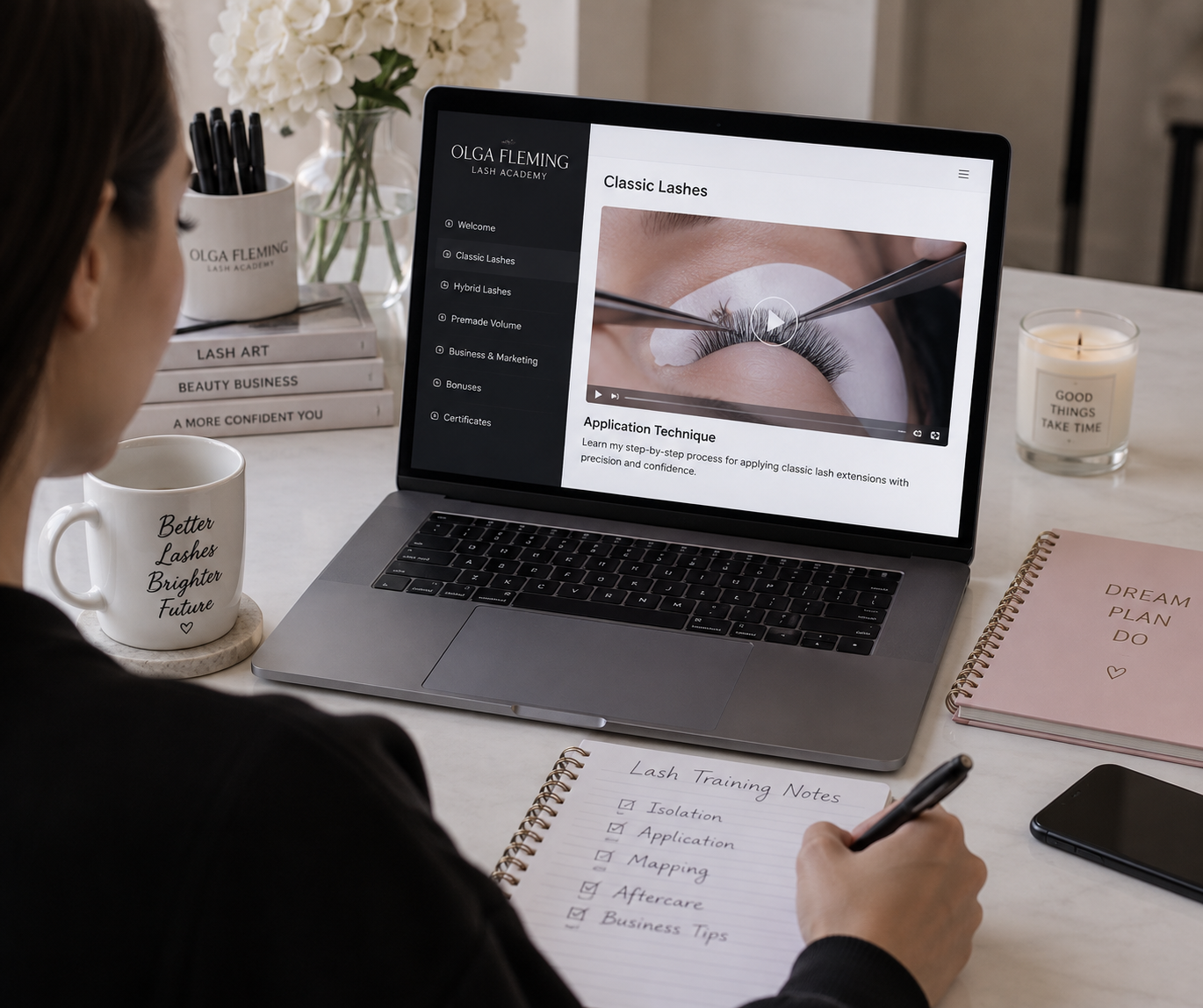
Online lash training allows you to learn eyelash extension theory and application techniques through digital lessons, usually using a combination of written theory and video demonstrations.
Instead of attending training at a specific time and location, you can work through the lessons at your own pace. You can pause demonstrations, replay difficult techniques and return to earlier lessons while you practise.
A comprehensive beginner course should cover more than simply applying extensions. It should teach areas such as natural lash health, hygiene and safety, isolation, placement, adhesive control, styling, lash mapping, infills, safe removal and aftercare.
The main difference is that your educator isn’t physically beside you while you practise. This makes the quality of the lessons and access to personal support particularly important.
What Is In-Person Lash Training?
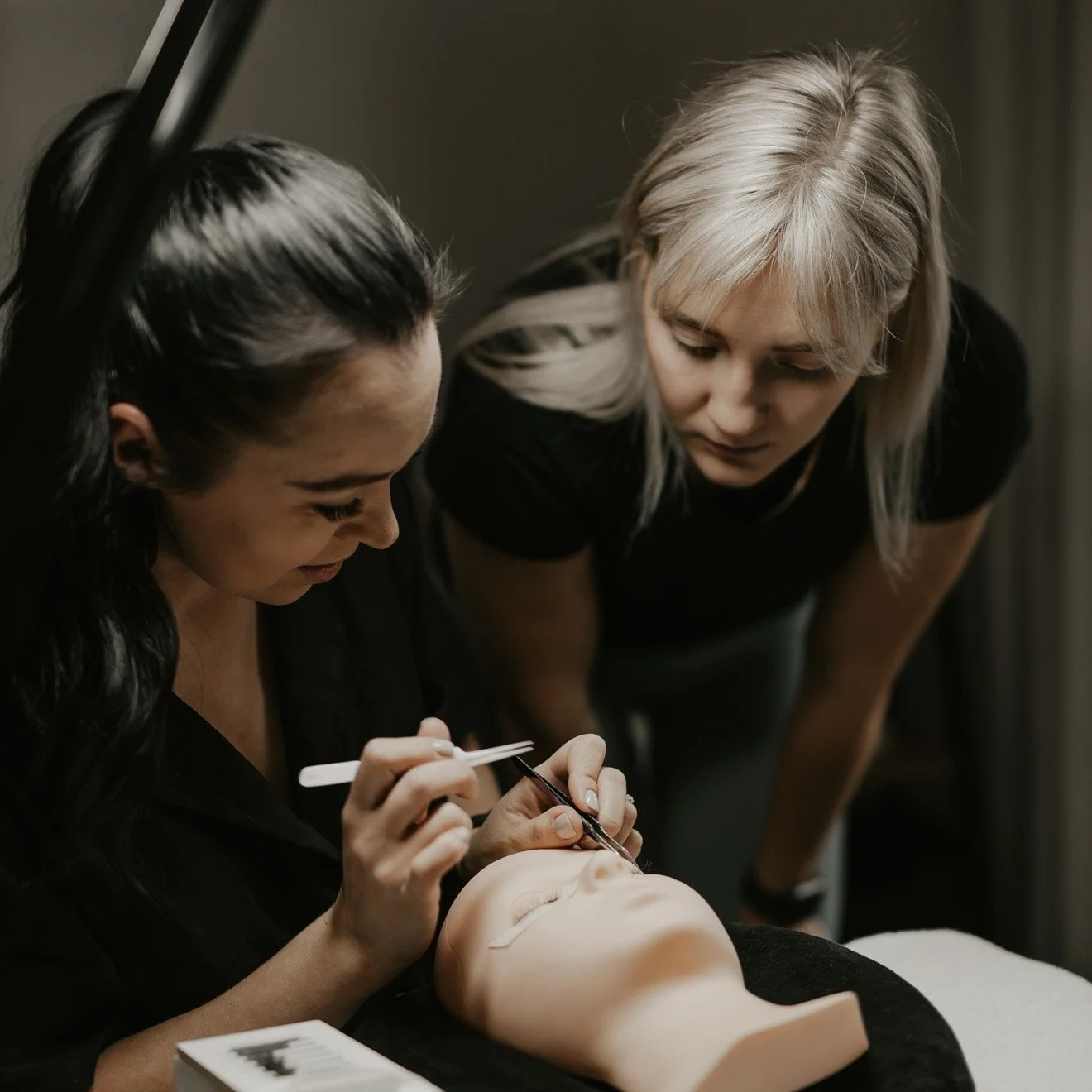
In-person lash training takes place with an educator physically present while you learn and practise. Depending on the course, this may be taught in a group or as private one-to-one training.
You’ll usually learn the theory alongside practical application, with the educator able to watch your technique as you work. They can correct things such as your hand position, tweezer control, isolation, lash direction and placement in real time.
One of the biggest advantages is immediate feedback. If you’re struggling with a technique, the educator can often see exactly what’s causing the problem and demonstrate a different way to approach it.
Private training provides the highest level of individual attention because the educator can adapt the practical sessions to your progress and spend more time on the areas you personally find difficult.
Advantages of Online Lash Training
One of the biggest advantages of online lash training is flexibility. You can learn around work, family and other commitments instead of needing to attend training on specific days.
You can also learn at your own pace. If you find a technique difficult, you can pause the demonstration, replay it and practise before moving on. With lifetime course access, you can return to the lessons later whenever you need a refresher.
Online training can also be considerably more affordable than private in-person education because you’re not paying for many hours of an educator’s individual time. You may also save on travel and accommodation if suitable training isn’t available near you.
Another advantage is choice. You’re able to learn from an educator whose work and teaching style you like, even if they’re based in another city or country.
Limitations of Online Lash Training
The main limitation of online training is that your educator cannot physically watch you from every angle while you’re working. Small details such as hand position, tweezer angle or the way you’re controlling the natural lash can sometimes be easier to identify in person.
You also need to be disciplined about practising. It can be tempting to complete the lessons quickly, but watching demonstrations isn’t the same as developing the practical skill yourself.
This is why I think personal support is particularly important with online lash education. Being able to ask questions and send photos of your work for feedback can help you recognise problems before they become habits.
If you know that you struggle to learn practical skills independently or prefer someone correcting you as you work, in-person training may suit you better.
Advantages of In-Person Lash Training
The biggest advantage of in-person training is having an educator watch you work in real time. They can immediately identify problems with your isolation, placement, hand position or tweezer control and help you correct them before they become habits.
For beginners who learn best by watching something demonstrated and then trying it with guidance, this can make the learning process feel much easier.
In-person training can also give you structured practical time. Rather than needing to organise your own practice, you have dedicated sessions where you can focus entirely on developing your lash skills.
With private one-to-one training, the sessions can be adapted to your progress. If you’re confident with one technique but struggling with another, more time can be spent on the area where you actually need help.
Limitations of In-Person Lash Training
The main disadvantage of in-person lash training is the cost. Private education usually requires a much larger investment because you’re paying for the educator’s time, practical sessions and often additional materials or a professional starter kit.
It’s also less flexible. Training takes place at scheduled times, so you need to organise your work, family or other commitments around those sessions. If the educator you want to learn from is in another city, you may also have travel and accommodation costs.
Another limitation is that once the practical session finishes, you can’t simply replay it. This is why I like combining online theory with in-person practical training, so students can return to the educational material while they continue practising at home.
In-person training can provide excellent hands-on guidance, but you’ll still need plenty of independent practice afterwards. No matter how good the educator is, practical lash skills develop through repetition over time.
How Much Does Online vs In-Person Lash Training Cost?
Cost is often one of the biggest differences between online and in-person lash training. Online courses are generally more affordable because the educator can provide the training without being physically present for every student’s practical sessions.
My beginner Online Lash Course is currently NZ$199 and teaches Classic, Hybrid and Premade Volume lash extensions. It includes lifetime access, personal support and a Certificate of Completion, with an optional professional starter kit available separately.
Private training involves a much larger investment because you’re paying for individual educator time and hands-on guidance. My private one-to-one beginner lash training in Christchurch is NZ$2,500 and includes online theory, four private practical sessions, live model work, a professional starter kit valued at approximately NZ$500, a Certificate of Completion and ongoing support.
Rather than comparing the prices alone, consider what level of guidance you need and what is included. For one student, an affordable online course may provide everything they need to get started. For another, the additional investment in private practical training may be worthwhile.
Which Type of Lash Training Is Better for Complete Beginners?
Both formats can work well for complete beginners, but the better option depends largely on how you learn.
If you’re comfortable following detailed instructions, replaying demonstrations and practising independently, online training can be an excellent starting point. It allows you to learn gradually without the pressure of trying to absorb everything during a limited number of training hours.
If you find practical skills easier when someone demonstrates them directly and watches you repeat them, in-person training may help you progress more quickly. Immediate correction can be particularly useful when you’re first learning isolation, placement and tweezer control.
I’ve taught students with very different learning styles over the years. Some need very little correction once they understand the technique, while others benefit enormously from having me beside them while they work.
The most important thing is choosing the format that gives you the best chance of understanding the techniques and then practising them consistently.
Which Lash Training Option Is Better if You’re Busy?
If you’re balancing work, children or other commitments, online lash training usually gives you more flexibility. You can study when it suits you rather than needing to keep specific training days free.
You can also divide the course into smaller sessions. Instead of trying to absorb a full day of information at once, you might watch one lesson, practise the technique and return to the next lesson when you have time.
In-person training requires more planning because practical sessions happen at scheduled times. However, having those appointments in your calendar can be helpful if you know you’re more likely to practise when you have a structured commitment.
Think realistically about your routine. The best training format is the one you’ll actually have enough time and motivation to complete and practise properly.
Which Lash Training Option Gives You More Support?
Support can make a big difference when you’re learning lashes because many questions only appear once you actually start practising.
With in-person training, support is immediate during your practical sessions. Your educator can watch you work, identify what’s going wrong and help you correct it there and then.
Online training can also provide strong support, but this depends on the course. Before enrolling, check whether you can contact the educator directly, send photos of your work and ask questions while you practise. Some online courses provide the lessons but very little personal contact afterwards.
Whichever format you choose, I think support after the initial training is particularly valuable. Learning doesn’t stop when you finish the course. Your technique continues developing through practice, feedback and experience.
Online or In-Person Lash Training: Which Is Better for Your Budget?
If budget is your main consideration, online training will usually be the more accessible option. It allows you to invest in professional education without the much higher cost of private practical sessions.
However, the cheapest option isn’t automatically the best value. Look at what the course includes, how comprehensive the training is, whether you have ongoing access, and whether you can receive personal support while you practise.
If you have a larger budget and know that you benefit from hands-on correction, private in-person training may be worth the additional investment. You’re paying not only for the course content but also for individual educator time and immediate practical feedback.
I recommend choosing the best training you can comfortably afford without feeling that you need to select the most expensive option to learn properly.
Can Online and In-Person Lash Training Be Combined?
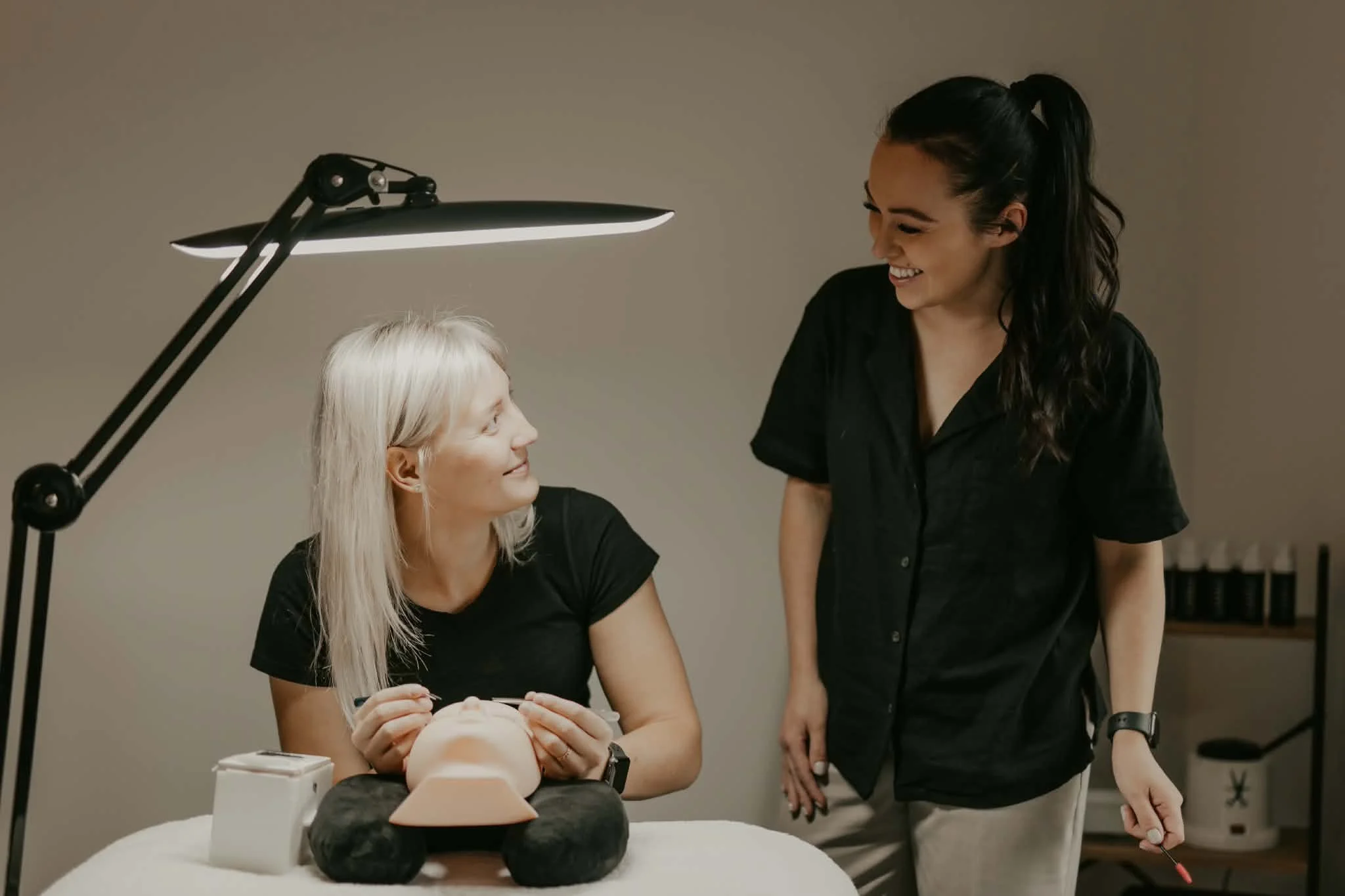
Yes, and I actually think combining the two can work extremely well. Online learning gives you time to understand the theory and watch demonstrations before you need to perform the techniques yourself, while practical sessions give you the opportunity to receive hands-on correction.
This is how I structure my private beginner lash training. Students complete the theory online, then attend four private practical sessions with me in Christchurch. This means we don’t need to spend valuable face-to-face time reading through theory that can be studied at home.
Instead, our practical sessions can focus on technique, isolation, placement, adhesive control and working on live models. Students can then return to the online material afterwards whenever they need to refresh their knowledge.
For beginners who want the flexibility of online learning but also value individual hands-on guidance, a blended approach can offer the advantages of both.
How to Decide Which Lash Training Is Right for You
Start by thinking about how you normally learn practical skills. If you’re comfortable following demonstrations, practising independently and asking questions when you need help, online training may suit you very well.
If you prefer someone watching you work and correcting your technique immediately, in-person training may be worth the additional investment.
Your location, budget and available time also matter. Online training gives you greater flexibility and is generally more affordable, while private training gives you more direct access to your educator.
There isn’t one correct choice for every beginner. Choose the format that fits your learning style and circumstances, then be prepared to practise consistently whichever option you choose.
Online vs In-Person Lash Training: Which Is Better Overall?
Neither option is better for every student. Online training offers flexibility, affordability and the ability to replay lessons whenever you need them. In-person training offers immediate hands-on correction and more direct guidance while you practise.
If you’re self-motivated, comfortable learning independently and want a more affordable way to begin, a comprehensive online lash course can be a great choice.
If you learn best through hands-on instruction, want an educator watching your technique and have the budget for more individual guidance, private in-person training may suit you better.
I offer both because I’ve seen students succeed with different approaches. My Online Lash Course teaches Classic, Hybrid and Premade Volume with lifetime access and personal support. For students who want more hands-on guidance, my private one-to-one lash training in Christchurch combines online theory with four practical sessions, live model work and ongoing support.
Whichever option you choose, the course itself is only the beginning. Consistent practice, feedback and continued learning are what will ultimately develop your skills and confidence as a lash technician.
