How Long Does It Take to Become a Lash Technician?

If you’re thinking about becoming a lash technician, you may be wondering how long it actually takes before you can start working with clients. Is it something you can learn in a few days, or does it take months?
The answer depends on the type of training you choose, how often you practise and how quickly you develop the practical skills needed for safe, consistent lash application.
After more than 12 years working as a lash artist and 8 years training lash students, I’ve seen beginners progress at very different speeds. Some pick up certain techniques quickly, while others need more time and repetition before they feel confident.
In this guide, I’ll explain how long lash training can take, how much practice you may need afterwards, and what actually determines when you’re ready to start taking paying clients.
How Long Does Lash Training Take?
The training itself can take anywhere from a few days to several weeks or longer, depending on the course format. Online training is usually more flexible because you can work through the theory and demonstrations at your own pace, while in-person courses follow a more structured timetable.
However, completing the course isn’t the same as becoming confident at applying lashes. Training gives you the knowledge and techniques you need to begin, but your practical skills develop afterwards through repetition.
This is why I wouldn’t judge a lash course simply by how quickly it can be completed. A course advertised as something you can finish in a day may still require weeks or months of practice afterwards before you feel ready to work professionally.
Think of your training as the starting point. How quickly you progress from there depends much more on the quality and consistency of your practice.
How Long Does It Take to Learn the Basics of Lash Extensions?
You can learn the basic theory and understand the application process relatively quickly, but understanding a technique and being able to perform it confidently are two different things.
During your initial training, you’ll learn areas such as natural lash health, hygiene and safety, isolation, correct placement, adhesive control, lash curls and thicknesses, styling, removal and aftercare.
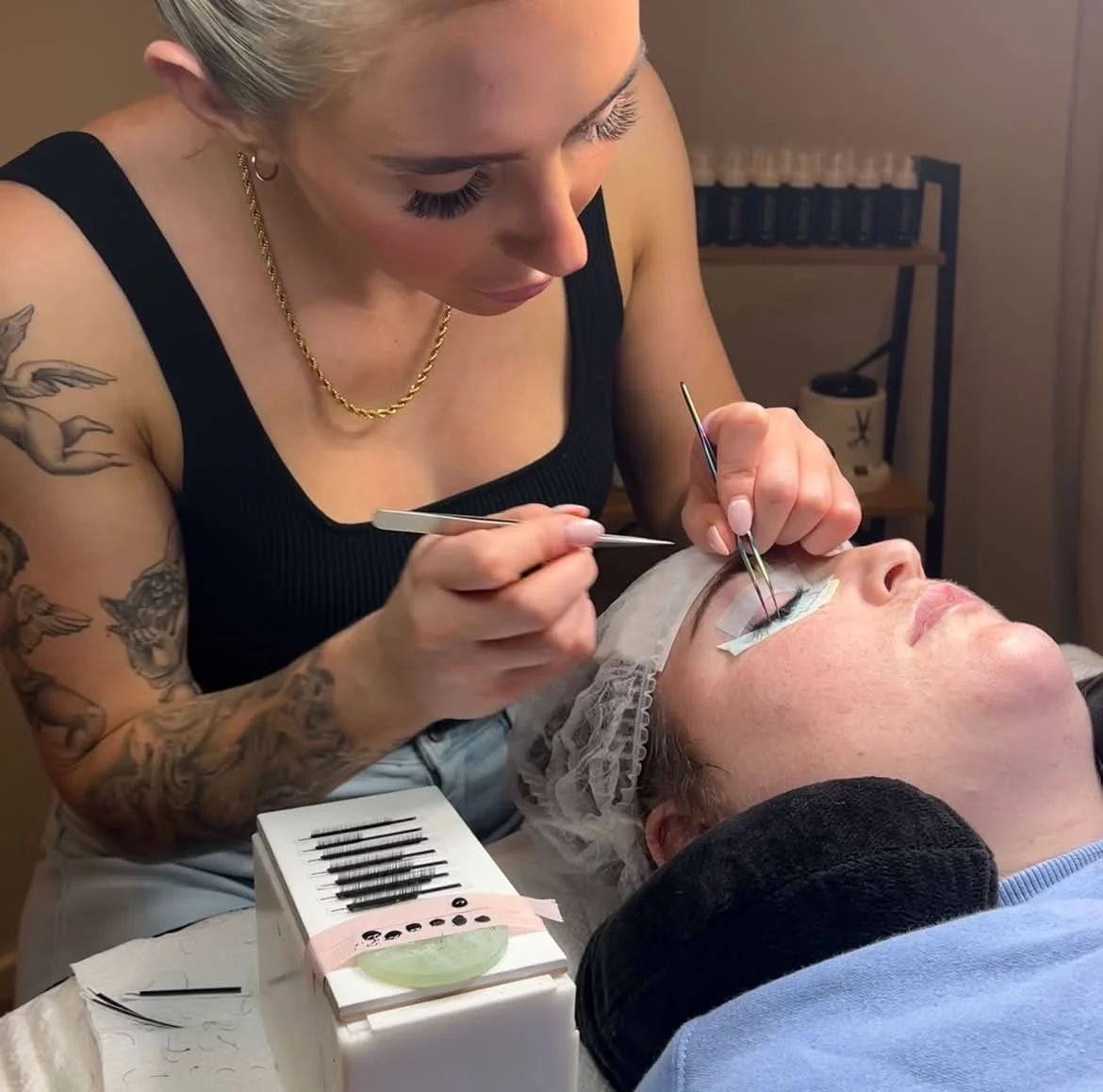
You may understand these concepts within your first few lessons, but your hands still need time to develop the coordination required for lash application. Using two tweezers simultaneously, isolating tiny natural lashes and placing extensions accurately can feel surprisingly difficult at first.
That’s completely normal. Beginners shouldn’t expect their hands to work at the same speed or precision as an experienced lash artist immediately. The practical side becomes easier as you repeat the movements and develop muscle memory.
How Long Should You Practise Before Taking Paying Clients?
There isn’t a specific number of weeks or practice sets that makes every beginner ready for paying clients. Some students progress quickly, while others need considerably more repetition before their work becomes consistent.
Rather than focusing on a deadline, look at the quality of your technique. You should be able to isolate natural lashes correctly, place extensions safely, control your adhesive and create a clean set without lashes sticking together.
I also recommend practising on several different people before working professionally. Natural lashes vary in direction, density and condition, so working on different models teaches you much more than repeating the same set on one person.
Don’t feel pressured to start charging simply because you’ve completed your course. Give yourself enough time to develop safe, consistent technique first. Speed and confidence will improve as you gain experience.
What Skills Should You Have Before Working With Clients?
Before taking paying clients, you should feel confident with the fundamental skills that affect both the safety and quality of your work.
You should be able to isolate natural lashes properly, apply extensions at a safe distance from the eyelid, control the amount of adhesive you use and maintain consistent direction and placement. You should also understand how to choose suitable lengths, curls and thicknesses without putting unnecessary weight on the natural lashes.
You don’t need to be incredibly fast or create advanced sets when you’re starting. A beginner who works slowly but safely and carefully has a much stronger foundation than someone who rushes to reduce their appointment time.
Your technique will continue improving once you begin working professionally. The goal before taking clients isn’t perfection, it’s being able to provide a safe, comfortable and consistently applied service.
How Often Should You Practise Lash Extensions as a Beginner?
Regular practice is usually more effective than doing several sets close together and then taking a long break. When you’re learning a precise hand skill like lash application, consistency helps the movements start to feel more natural.
If possible, try to practise several times each week while you’re developing your technique. Your sessions don’t always need to involve completing an entire lash set. You can spend focused practice time working specifically on isolation, placement, direction or adhesive control.
Take photos of your work as you progress. Comparing your earlier sets with newer ones can help you see improvements that may not feel obvious while you’re practising.
Quality matters more than simply counting hours. Practise slowly and deliberately, correct mistakes when you notice them, and use feedback from your educator whenever you need guidance.
How Long Does It Take to Get Faster at Lash Extensions?
Speed is one of the things new lash technicians worry about most, but it usually develops after your technique becomes more automatic.
Your first full sets may take several hours, and that doesn’t mean you’re progressing too slowly. At the beginning, you’re consciously thinking about isolation, adhesive, placement, direction and styling at the same time. As those movements become more familiar, your appointment time should gradually reduce.
I recommend focusing on clean technique before trying to work faster. Rushing too early can lead to poor isolation, stickies, inconsistent placement and other habits that you’ll eventually have to correct.
Track your timing occasionally, but don’t make it your main measure of progress. A beautiful, safe set that takes longer is much more valuable at this stage than a rushed set completed simply to meet a time target.
What Can Make Your Progress Faster?
The biggest factor is consistent, focused practice. Practising regularly helps you develop coordination and allows you to correct small problems before they become established habits.
Good training also makes a difference. Clear demonstrations, strong foundations and access to an experienced educator can save you time because you’re less likely to spend weeks repeating a technique incorrectly.
Try to get feedback on your work whenever possible. Photos can reveal issues with direction, placement and consistency that are difficult to notice while you’re concentrating on completing the set.
Finally, don’t try to learn everything at once. Master the fundamentals first, then gradually add more advanced styling and techniques as your confidence develops. A strong foundation will usually help you progress faster in the long term.
What Can Slow Down Your Progress?
Long gaps between practice sessions can make learning take longer because you may spend part of each session getting comfortable with the tweezers and movements again.
Trying to rush can also slow your progress in the long term. If you repeatedly practise poor isolation, incorrect placement or inconsistent adhesive control, those habits can become harder to correct later.
Another common problem is comparing your work with experienced lash artists. Someone who has completed thousands of sets will naturally work faster and more confidently than a beginner. Use your own earlier work as the comparison instead.
If you feel stuck, ask for feedback rather than simply repeating the same technique. Sometimes one small correction from an experienced educator can help you understand why something hasn’t been working.
Does Online or In-Person Training Affect How Quickly You Learn?
The format of your training can influence how you learn, but it doesn’t automatically determine how quickly you’ll become confident.
Online training allows you to work at your own pace. You can replay demonstrations, pause when you need more practice and return to lessons whenever you want. This can work particularly well for students who are self-motivated and prefer having time to absorb each technique.
In-person training gives you immediate hands-on feedback. An educator can watch your isolation, placement and tweezer control while you work and correct problems straight away, which can help some beginners progress faster.
Neither option removes the need for practice. Whether you learn online or in person, the time you spend applying what you’ve learned will have a much greater effect on your progress than how quickly you complete the course itself.
How Long Does It Take to Become Confident as a Lash Technician?
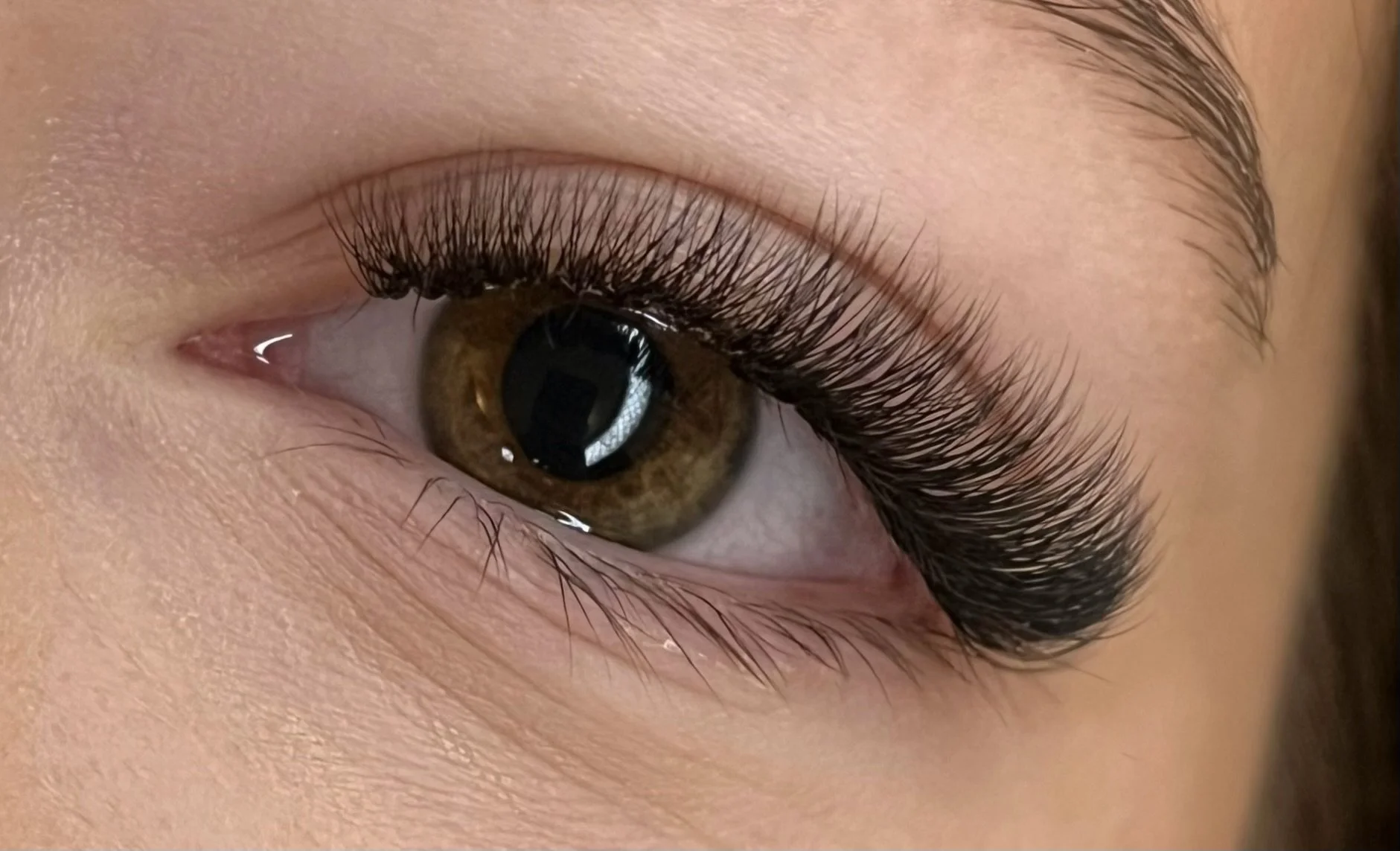
Confidence usually develops gradually rather than appearing the moment you finish training. You may understand the techniques quite quickly but still feel nervous when you begin working on different eye shapes, natural lash conditions and client preferences.
Every set gives you more experience. You learn how to handle difficult natural lashes, adjust your styling, solve retention problems and make decisions without needing to second-guess every step.
For many beginners, the first few months are still very much a learning period. That doesn’t mean you need to wait until you feel completely confident before progressing, but your priority should always be working safely and recognising when you need advice.
Even after more than 12 years in the lash industry, I still see learning as part of the job. Techniques, products and your own skills continue to develop long after your beginner training is finished.
Can You Become a Lash Technician in a Few Weeks?
You can certainly complete beginner lash training and make significant progress within a few weeks, especially if you’re able to practise regularly. However, I would be careful about treating a particular number of weeks as a guarantee that you’ll be ready for paying clients.
Becoming a lash technician involves more than finishing lessons. You need to turn what you’ve learned into practical skills that you can perform safely and consistently on different natural lashes and eye shapes.
A motivated beginner who practises several times a week may progress much faster than someone who completes the same course but only practises occasionally.
Instead of setting yourself a deadline, set skill-based goals. Focus on improving your isolation, placement, direction and adhesive control, then gradually work on your timing as those fundamentals become more consistent.
How Long Does It Take to Build a Regular Lash Client Base?
Learning to apply lashes is only one part of becoming a working lash technician. Building a regular client base usually takes additional time, and it can vary considerably depending on your location, pricing, availability and how you market your services.
Your first clients may come from friends, family, referrals or people who have seen your practice work online. As your technique improves, start building a portfolio that clearly shows the type of lash work you want to offer.
Client retention matters just as much as finding new people. Providing consistent results, good retention, a comfortable experience and reliable service can gradually turn first-time appointments into regular clients.
Don’t expect a fully booked diary immediately after training. Focus first on becoming good at the service you provide, then build your clientele gradually as your confidence, portfolio and reputation grow.
How Do You Know When You’re Ready to Become a Working Lash Technician?
You’re ready to start moving from practice into professional work when your technique is consistently safe and you can recognise and correct your own mistakes.
You should feel comfortable with isolation, placement, adhesive control and choosing appropriate extensions for the natural lashes. Your sets don’t need to be extremely fast or look like the work of someone with years of experience, but they should be clean, comfortable and safely applied.
It’s also important to know your limits. If you’re unsure whether a particular lash length, weight or technique is suitable, you should be confident enough to choose the safer option or ask for guidance.
Becoming a working lash technician isn’t one single moment when you suddenly know everything. It’s a gradual transition from learning, to practising, to working with clients while continuing to improve your skills.
So, How Long Does It Take to Become a Lash Technician?
There isn’t one exact timeline that applies to every beginner. You can learn the theory and basic application process relatively quickly, but becoming confident and consistent with lash extensions takes ongoing practice.
Some students may be ready to begin working with clients sooner than others. What matters more than the number of weeks you’ve been training is whether you can isolate correctly, apply extensions safely, control your adhesive and produce clean, comfortable sets consistently.
My advice is not to rush toward a particular deadline. Complete good-quality training, practise regularly, ask for feedback and allow your speed to develop naturally as your technique improves.
If you want to begin learning from home, my Online Lash Course teaches Classic, Hybrid and Premade Volume lash extensions with lifetime access, personal support and a Certificate of Completion.
For students who prefer more hands-on guidance, I also offer private one-to-one lash training in Christchurch, combining online theory with four practical sessions, live model work and ongoing support.
Becoming a lash technician isn’t about how quickly you can finish a course. It’s about building the skills and confidence to provide a safe, professional service to your future clients.
