What Should Be Included in a Professional Lash Starter Kit?
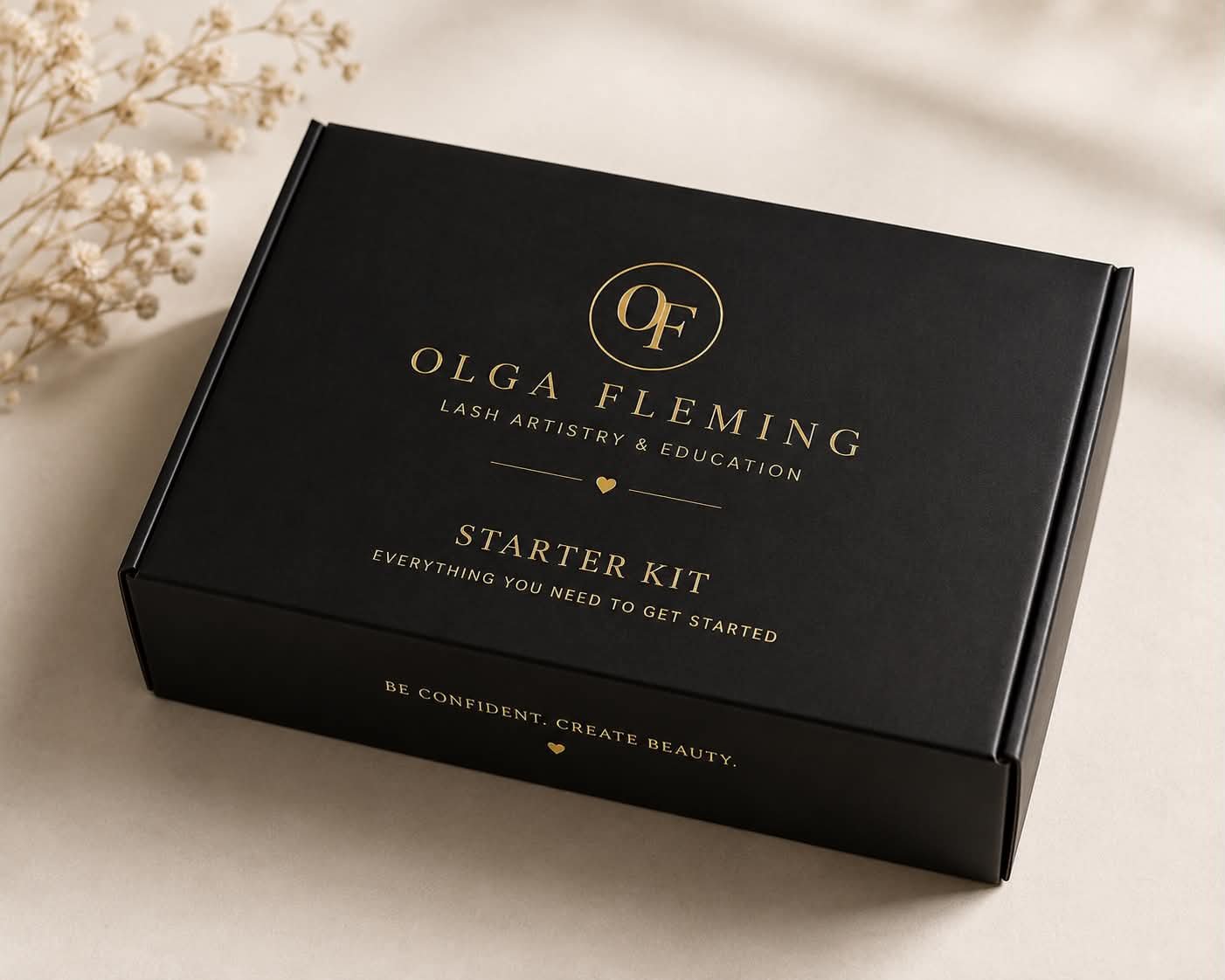
When you are learning eyelash extensions, it is easy to think you need to buy everything you see experienced lash artists using.
You don't.
A beginner needs a well-planned collection of reliable products and tools that allows you to practise the techniques you are learning safely and consistently.
Buying too much at the beginning can actually make things more confusing.
After more than 12 years working in the lash industry and 8 years teaching lash students, I have seen beginners spend money on products they barely use while missing some of the basic items they actually need.
Here is what I would include in a professional lash starter kit for a beginner.
1. Professional Lash Tweezers
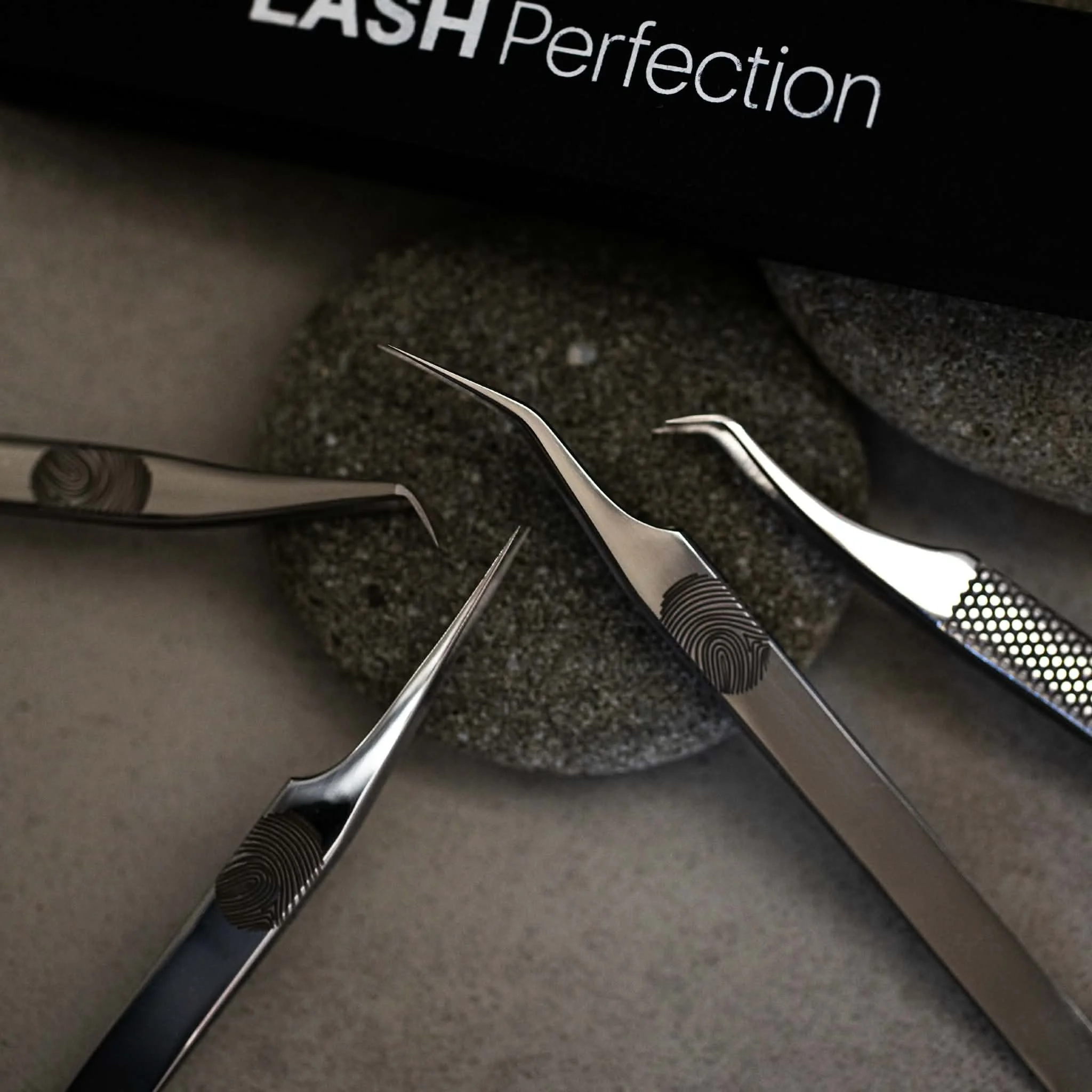
Tweezers are one of the most important tools in your kit.
At minimum, you need a reliable isolation tweezer and an application tweezer suitable for the techniques you are learning.
There are many different shapes available, including straight, curved and angled styles.
There is no single tweezer shape that feels best for every lash artist.
Your hand position and technique will influence what feels comfortable.
The most important thing is that your tweezers close accurately, have a comfortable grip and allow you to control very small lashes without unnecessary hand tension.
You do not need ten pairs when you are starting.
Begin with a few good-quality tools and learn how to use them properly.
2. Eyelash Extension Adhesive
Professional lash adhesive is essential.
Different adhesives have different working speeds and recommended environmental conditions.
A very fast adhesive is not necessarily better for a beginner.
If the adhesive cures faster than you can comfortably isolate and place the extension, you may struggle to create a secure attachment.
Choose an adhesive suitable for your current working speed and learn how it behaves.
Storage, freshness, temperature and humidity can all affect performance, so understanding your adhesive is just as important as purchasing it.
3. Classic Lash Trays
Classic lashes are applied individually, with one extension attached to one suitable natural lash.
A beginner kit should include enough lengths to practise creating a balanced lash set rather than relying on only one or two lengths.
Mixed-length trays can be useful when you are beginning because they allow you to experiment with several lengths without buying a full tray of every size.
You may eventually build a much larger collection of curls, diameters and lengths.
You do not need all of them on day one.
4. Premade Volume Fans
If your beginner training includes Premade Volume, your kit should contain appropriate premade fans for practising that technique.
Premade fans allow you to create a fuller result without hand-making each Volume fan yourself.
They still require correct isolation, placement, adhesive control and appropriate weight selection.
Volume does not remove the need for strong fundamentals.
Learn how to attach premade fans cleanly rather than simply concentrating on creating the fullest possible set.
5. Under-Eye Pads
Under-eye pads help separate and secure the lower lashes during application.
They should sit comfortably without touching the client's eye.
You may need to try different shapes because clients have different eye shapes and lower lash lines.
Some lash artists also use tape together with pads to achieve better lower-lash control.
Learning how to correctly prepare and secure the lower lashes is an important part of your practical training.
6. Professional Tape
Tape is one of those simple products that becomes incredibly useful during lash application.
It can help secure lower lashes, adjust pads, gently manipulate the eyelid or assist with accessing different areas of the lash line.
Different types of tape behave differently on the skin.
Your training should show you how to use tape appropriately rather than simply including a roll in your kit with no explanation.
7. Lash Cleanser and Cleansing Tools
Clean natural lashes are important for professional application.
Your kit should include an appropriate lash cleanser and tools for cleansing the lashes before application.
This may include cleansing brushes and disposable items used during preparation.
Make sure any product you use around the eyes is suitable for its intended purpose.
Good preparation should become part of your normal lash routine from the beginning.
8. Micro Applicators and Disposable Brushes
Small disposable applicators are useful for preparation, removal and other parts of the service depending on the products you use.
Disposable mascara wands or lash brushes are also useful for brushing through extensions and can be provided to clients for aftercare where appropriate.
Consumables may seem inexpensive individually, but you will use them regularly.
Include them when calculating the real cost of setting up your lash kit.
9. Adhesive Holder
You need a practical surface for your adhesive drop.
Depending on your working method, this could be an adhesive stone, glue palette, ring or another professional adhesive holder.
The important thing is creating a consistent setup that allows you to access fresh adhesive efficiently while you work.
As you become more experienced, you will develop preferences for how your workstation is arranged.
10. Lash Mapping Supplies
Lash mapping helps you plan how lengths and styling will progress across the eye.
A beginner kit may include mapping pens and suitable pads or tape that allow you to mark your design.
Learning mapping is useful because professional lash styling should not simply mean applying the same lengths to every client.
Different eye shapes and natural lashes require different decisions.
11. Lash Extension Remover
You should know how to remove extensions safely.
Professional remover allows you to break down the adhesive bond when a full or partial removal is required.
Do not improvise with products that were not designed for professional lash extension removal.
Your training should explain how to use remover correctly and safely around the eye area.
12. Practice Materials
Not every part of your early training needs to begin on a live person.
Practice lashes, mannequin heads or similar training materials can help you become comfortable with your tweezers, isolation movements and placement before progressing to models.
These tools cannot completely replicate natural lashes.
Eventually, you need experience working on real lash lines.
But they can make the first stage less intimidating.
13. Hygiene and Disposable Supplies
Your starter kit should support clean professional working habits.
Depending on your setup and training, this may include disposable applicators, cleansing supplies, tissues, hand hygiene products and suitable methods for cleaning or disinfecting reusable tools.
Do not treat hygiene as an optional extra you will think about once you begin charging clients.
Build good habits while you are still practising.
14. A Suitable Lash Light
Technically, your professional equipment extends beyond the products that fit inside a starter kit.
Good lighting is extremely important.
You are working with tiny natural lashes for extended periods, and poor visibility makes isolation and placement much harder.
A professional lash light also helps when photographing your finished work.
You do not necessarily need the most expensive light available, but you do need clear, consistent illumination over your working area.
15. A Comfortable Lash Bed or Treatment Table
Once you move onto live models, you need a suitable working surface.
Your model or client needs to remain reasonably comfortable, and you need to position yourself correctly while working.
Your bed, stool, lighting and working height all affect your posture.
Lash appointments can be long, particularly while you are a beginner, so ergonomics matter.
Do You Need Every Lash Curl and Length as a Beginner?
No.
This is one of the easiest ways to overspend when starting.
Experienced lash technicians may have drawers filled with different curls, diameters, colours, lengths and fan sizes because they work with many clients and styles.
You can build that collection gradually.
Start with the products needed for the techniques you are learning.
As you begin working on more models and clients, you will understand what you actually use frequently.
Then expand your stock deliberately.
Should You Buy Cheap Lash Products to Practise With?
Practising does not mean product quality is irrelevant.
You are trying to develop professional technique.
If your tweezers do not close properly or your lash products behave unpredictably, it becomes harder to know whether the problem is your technique or the product.
That does not mean every item must be the most expensive option available.
Look for reliable professional products suitable for the purpose you are using them for.
I would rather see a beginner start with a smaller, carefully chosen kit than a huge collection of random products.
Should Your Lash Course Include a Starter Kit?
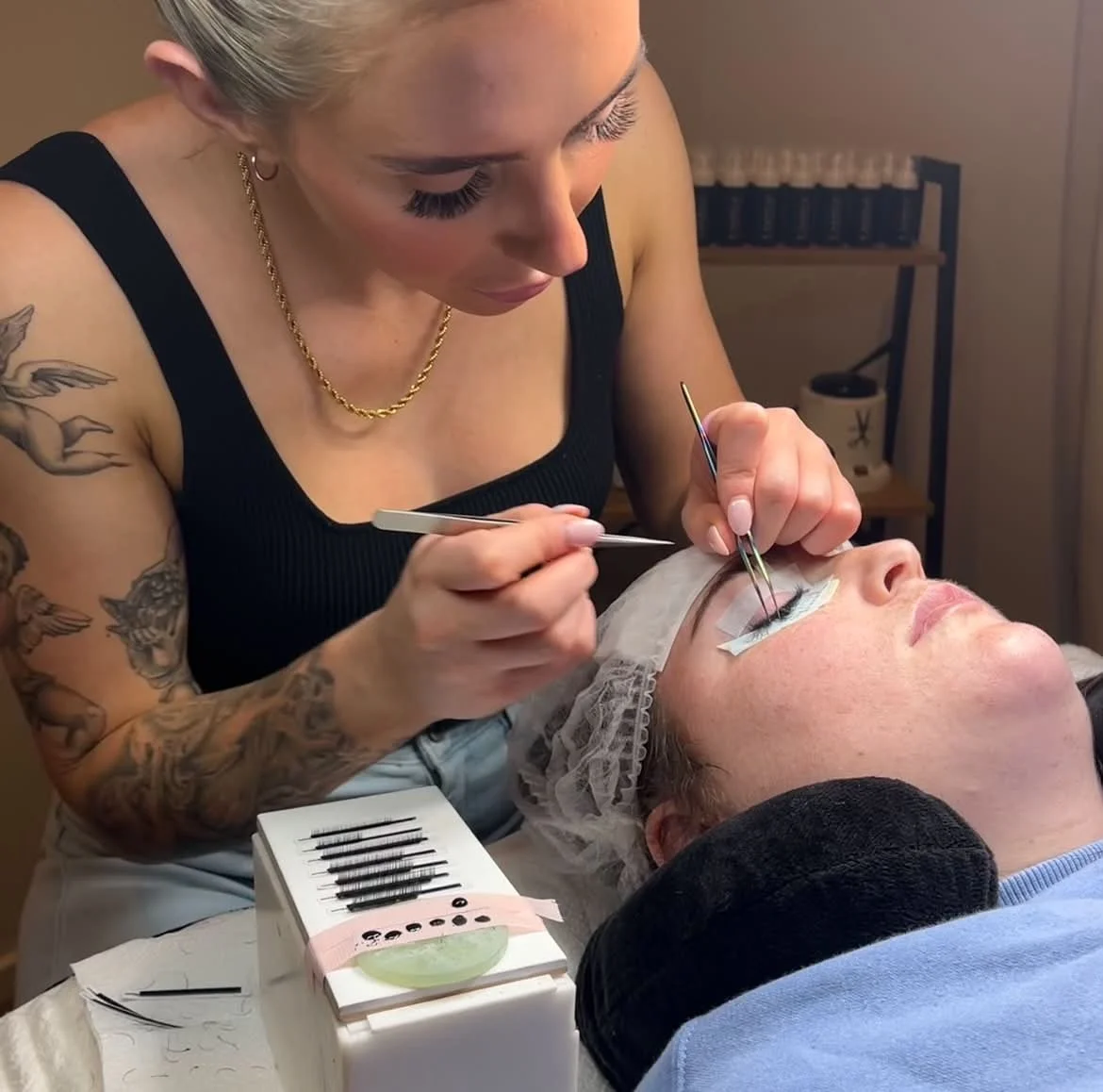
It can be a major advantage, particularly for complete beginners.
When the educator selects the products, you can practise with tools and materials that match the techniques being taught.
It also removes the stress of trying to understand dozens of product specifications before you have even learned how to isolate a lash.
But always check what the kit actually contains.
A course advertising a “huge professional kit” is not necessarily giving you better value if half of the products are unnecessary.
Look at usefulness, not simply quantity.
My private one-to-one lash training in Christchurch includes a professional starter kit valued at approximately NZ$500.
What If Your Course Does Not Include a Kit?
That is not necessarily a problem.
Some students already own products, while others prefer choosing their own equipment.
An optional kit can also make online training more accessible to students who already have what they need.
If you are purchasing everything separately, make a list before you start shopping.
Separate your purchases into:
Essential for training
Products you need immediately to complete your lessons and practise.
Essential before live models
Products and equipment required to work appropriately on another person.
Useful later
Additional curls, styling products, advanced tools and other items you can purchase once you understand your preferences.
This prevents an exciting online shopping session from becoming a very expensive drawer of unused lash supplies.
How Much Does a Professional Lash Starter Kit Cost?
The cost can vary considerably depending on the brands, quantity of stock and equipment included.
A small product kit will obviously cost less than a complete setup containing professional lighting, a treatment bed and a large selection of lash trays.
When comparing course prices, check whether a starter kit is included and what its realistic value is.
Also remember that products are only one part of the cost of entering the industry.
Training, equipment, insurance and potentially setting up a workspace should all be considered.
My guide on how much it costs to start a lash business in NZ looks at the wider startup costs.
Should You Buy a Huge Kit Before Your Lash Course?
I would wait.
Your educator may recommend particular product specifications or explain which items you genuinely need.
Buying first and learning later can result in purchasing products that do not suit the technique being taught.
If your course provides a supply list, use that as your starting point.
Once you understand why each product is used, choosing additional supplies becomes much easier.
What Is Included in My Beginner Lash Starter Kit?
My starter kit is designed around the products a beginner actually needs to begin practising the techniques taught in my training.
Rather than filling it with unnecessary products simply to make the kit look larger, I focus on useful professional tools and supplies that support practical learning.
Students taking my private training receive a professional starter kit as part of their training package.
For students completing my Online Lash Course, a starter kit is available separately for those who need one.
This gives online students the choice to use products they already own or purchase a prepared kit.
Your Technique Matters More Than the Size of Your Kit
It is easy to become excited about products when you enter the lash industry.
New tweezers, lash trays and accessories are fun.
But owning professional products does not automatically create professional work.
A small kit in the hands of someone who understands isolation, placement and adhesive control is much more valuable than a huge collection of supplies without good technique.
Invest in your education first.
Learn what the products do.
Practise consistently.
Then build your professional kit as your skills and business develop.
Ready to Start Learning Lash Extensions?
My Online Lash Course teaches complete beginners Classic, Hybrid and Premade Volume techniques step by step.
You'll receive lifetime access and personal support, and an optional professional starter kit is available if you need the products to begin practising.
