How Long Should a Beginner Lash Set Take?
One of the first things beginner lash artists worry about is speed.
You may spend three or four hours completing a set, then see an experienced lash technician online saying she finishes the same service in 90 minutes.
It can make you feel incredibly slow.
But when you are learning eyelash extensions, speed should not be your first priority.
Correct isolation, safe placement, adhesive control and clean application matter much more.
After more than 12 years working as a lash technician and years teaching students, I have seen many beginners become faster naturally as their technique improves.
The goal is not to rush.
The goal is to become accurate first, then efficient.
How Long Can a Beginner Lash Set Take?
There is no single time that every beginner should achieve.
During your early practise, a full lash set may take around 3 to 4 hours, and sometimes longer.
That does not automatically mean you are doing badly.
You are still learning how to:
isolate individual natural lashes
pick up extensions correctly
control your adhesive
position your hands and tweezers
attach extensions cleanly
maintain direction
work across different areas of the lash line
check for stickies
create a balanced finished set
Experienced technicians perform many of these movements almost automatically.
As a beginner, you still have to consciously think about each one.
That takes time.
Is Four Hours Too Long for a Beginner Lash Set?
Not necessarily.
If you are still training or working on models, taking four hours can be completely understandable.
What matters is what you are doing during those four hours.
If you are carefully isolating, checking your work and learning from the appointment, that time is helping you develop.
However, you should gradually look for improvement.
If you have completed many full sets and every appointment is still taking considerably longer than expected, it can be useful to identify where you are losing time.
The solution is usually not simply moving your hands faster.
It is improving the technique or workflow that is slowing you down.
Why Are Beginner Lash Artists Slower?
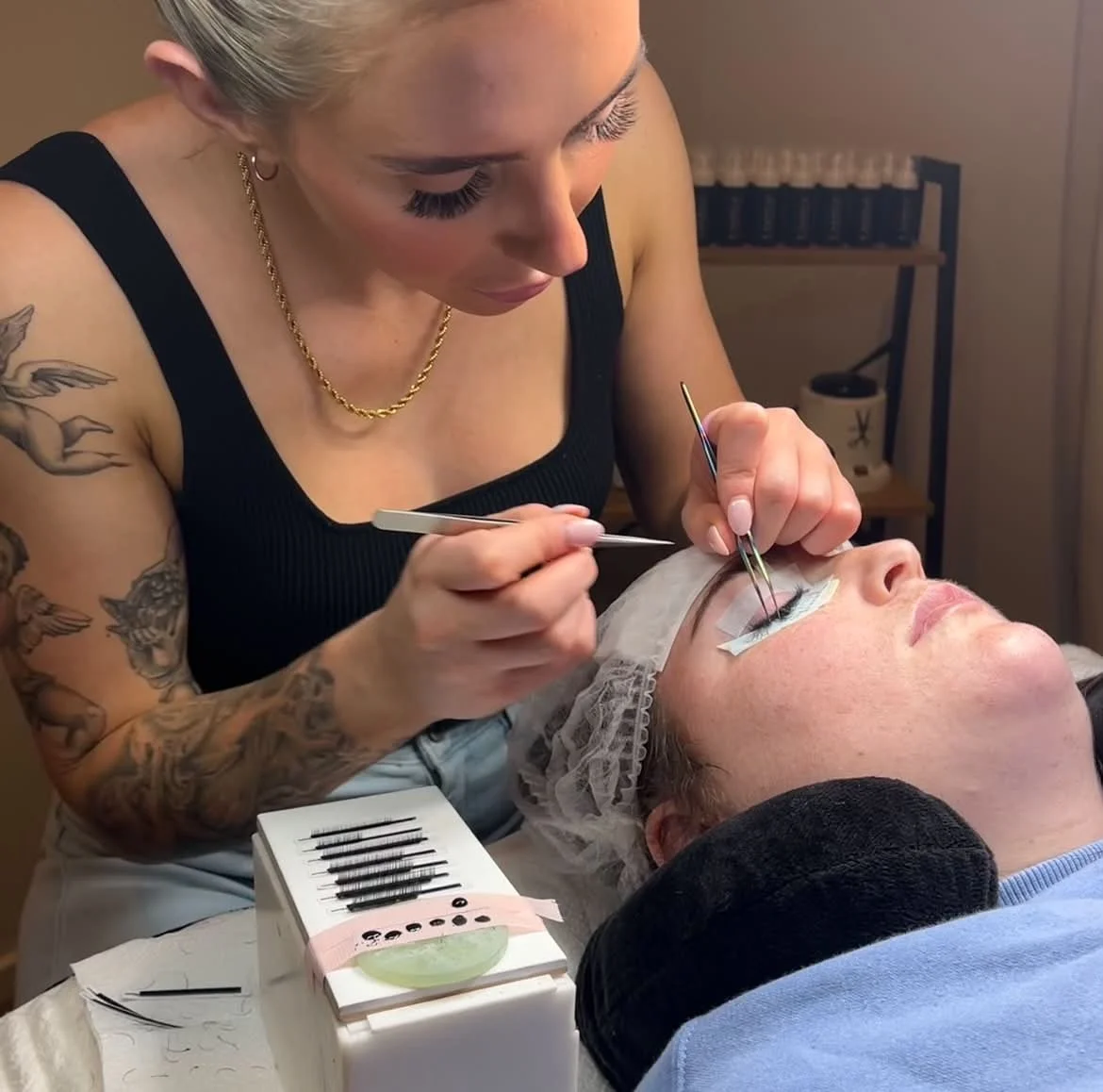
Beginners are slower because almost every part of the application is new.
Something as simple as isolating one natural lash can initially take several attempts.
You may isolate the lash, lose it, reposition your tweezers and try again.
Then you need to pick up an extension, dip it into adhesive, return to the isolated lash and attach it correctly.
Multiply that process across an entire lash line and the extra seconds quickly become hours.
With practise, those movements become much more efficient.
Isolation Is Often One of the Biggest Time Challenges
Good isolation is essential for safe lash application.
When natural lashes are accidentally stuck together, they can pull against each other as they grow.
Beginners should never sacrifice isolation simply to finish an appointment faster.
Instead, practise finding and separating lashes efficiently.
Work on:
tweezer positioning
hand stability
lighting
viewing angle
separating lash layers
moving systematically across the lash line
The easier isolation becomes, the faster your overall application usually becomes too.
Your Lash Setup Can Affect Your Speed
Sometimes the problem is not your actual lash technique.
It is your workspace.
If you constantly reach across the room for products, adjust your light, search for tweezers or look through multiple lash trays for the correct length, you lose time.
Prepare before the model or client arrives.
Have the products you expect to use within comfortable reach.
Your lash map should be planned.
Your tweezers should be ready.
Your adhesive setup should be organised.
Your lighting should already be positioned correctly.
A professional setup reduces unnecessary movement and allows you to concentrate on application.
Don't Try to Lash Every Single Natural Lash at First
Beginners sometimes believe a set is unfinished unless almost every suitable natural lash has an extension.
This can turn an already long appointment into an exhausting one.
Coverage is important, but during early practise, quality should come before chasing maximum coverage.
A clean, balanced set with good isolation and attachment is more useful for your development than rushing through additional lashes just to increase the number applied.
As your speed improves, your coverage can improve too.
Classic Lashes Are Important for Building Speed
Classic application is an excellent foundation because it teaches the fundamental movements used throughout lash work.
You learn:
isolation, pickup, adhesive control, attachment, direction and placement.
Once those movements become consistent, progressing into other techniques becomes easier.
This is one reason I believe beginners should develop strong fundamental application skills rather than immediately trying to master every advanced style.
Hybrid and Volume Sets May Take Different Amounts of Time
Not every lash service should take exactly the same amount of time.
A Classic set involves individual extensions.
Hybrid combines techniques.
Volume services involve fans, whether you are creating them by hand or using professional premade fans.
Your own timing will depend on the technique, desired coverage, natural lashes and finished style.
Do not compare the time for one service directly with a completely different service.
Track each type separately.
Natural Lashes Can Change Appointment Time
Some clients naturally have far more lashes than others.
One person may have fine, relatively sparse natural lashes that are straightforward to isolate.
Another may have extremely dense lashes growing in multiple layers and directions.
The second client may naturally take longer.
Eye shape, lash condition, watery eyes, movement and accessibility can also affect the appointment.
This is why there is no universal stopwatch time that proves whether someone is a good lash technician.
When Should You Start Trying to Get Faster?
Start thinking about efficiency once your basic application is becoming consistent.
Ask yourself:
Are my lashes properly isolated?
Is my attachment clean?
Am I controlling the amount of adhesive?
Is my placement safe?
Is my direction becoming consistent?
Am I checking for stickies?
If the answer is yes, you can begin looking for ways to reduce unnecessary time.
But do not replace good technique with rushing.
Speed built on poor technique simply creates faster poor-quality work.
Track Your Lash Set Times
One of the easiest ways to see progress is to record your appointment times.
You might write down:
date
service
model/client
start time
finish time
approximate coverage
what slowed you down
what went well
You may not notice improvement from one appointment to the next.
But compare your first set with your twentieth and the difference can be significant.
Tracking gives you evidence of progress rather than relying on how fast you felt.
Break the Appointment Into Sections
If you want to understand where your time goes, divide the appointment mentally into stages.
For example:
consultation and preparation, lash mapping, application, checking and finishing.
You can also pay attention to different sections of the eyes.
Perhaps you work efficiently through the middle but struggle with inner corners.
That tells you exactly what to practise.
Instead of trying to become “faster at lashes”, you can work on one specific weakness.
Inner Corners Often Slow Beginners Down
Inner lashes can be more difficult to see and access.
They may be shorter, finer and positioned differently.
Rather than avoiding them completely, practise your body position and tweezer angles.
Sometimes adjusting the client's head slightly, changing your own position or repositioning the light can make access much easier.
Do not force your wrist into an uncomfortable angle just to reach a lash.
Good ergonomics matter too.
Practise Isolation Separately
You do not always need to complete a full set to improve your speed.
Focused exercises can be extremely useful.
Spend dedicated practise time working only on isolation.
Or work on pickup and placement.
If one movement becomes faster and more controlled, the entire appointment becomes more efficient.
I explain this in more detail in my guide on how to practise lash extensions as a beginner.
Stop Constantly Changing Tools and Products
When beginners struggle, it is tempting to assume the products are the problem.
You buy another tweezer.
Then another adhesive.
Then different lashes.
Then a different tape.
Sometimes a product genuinely does not suit you.
But constantly changing everything makes it difficult to develop consistency.
Once you have reliable professional products, spend time learning how they behave.
Your technique needs consistency too.
Good Lighting Can Make You Faster
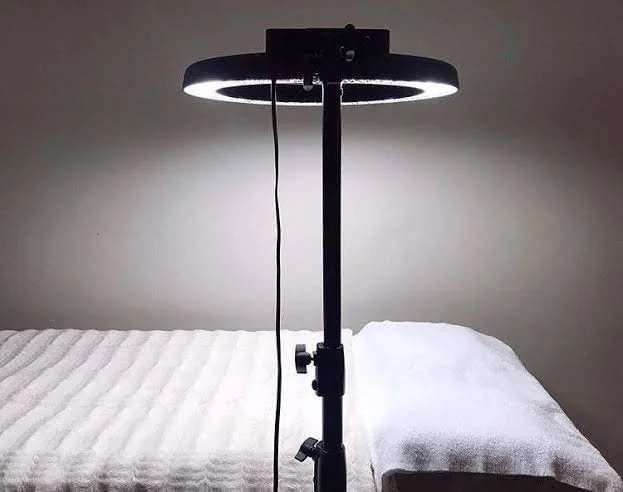
If you cannot clearly see the natural lashes, isolation becomes much harder.
A good lash light is not only useful for photographs.
It helps you see fine lashes and work more accurately.
Position the light so the lash line is clearly illuminated without creating uncomfortable glare for you.
If you find yourself constantly leaning forward or squinting, review your lighting and working position.
Comfort and Ergonomics Matter During Long Sets
A three-hour lash appointment feels even longer if your neck, shoulders and back are uncomfortable.
Set your chair, bed and client position so you can work with a relatively neutral posture.
Take sensible opportunities to reset your posture.
Developing good working habits early can help you avoid building a technique around uncomfortable positions.
Efficiency is not only about the client appointment.
You need a setup you can physically work in repeatedly.
Don't Compare Your Beginner Speed With Social Media
Online content can create unrealistic expectations.
You may see:
“Full set in 60 minutes!”
But you do not necessarily know the client's natural lash density, coverage, technique, editing, preparation time or the experience level behind that appointment.
Compare your current work primarily with your own previous work.
Are you isolating faster than a month ago?
Is your placement cleaner?
Are you completing more lashes in the same amount of time?
That is meaningful progress.
When Are You Ready to Take Paying Clients?
Speed is only one part of being ready.
Finishing quickly does not mean you are ready if your isolation or attachment is unsafe.
Before moving from models to regular paying clients, your application should be consistently safe and presentable.
You should also understand hygiene, consultation, contraindications, aftercare and professional client communication.
Your first paying appointments may still take longer than those of an experienced technician.
Be realistic when scheduling.
Do not book appointments back-to-back based on a time you cannot yet consistently achieve.
Should You Tell Clients You're a Beginner?
If you are charging a beginner or introductory price because you are still developing your speed, it is reasonable to communicate that clearly.
Clients are generally much more comfortable with a longer appointment when they know what to expect beforehand.
Do not promise a two-hour appointment if you know you normally need three and a half hours.
Set realistic expectations.
It makes the experience better for both you and the client.
Your Prices Can Develop as Your Speed Improves
Appointment time can influence the economics of your lash business.
When you are new, you may charge an introductory price while your sets take longer.
As you become more experienced, you may complete higher-quality work more efficiently.
Your pricing can develop with your skills and business.
I explain this further in how to price lash extensions when you're starting out.
Do not rush your technique purely because you want to increase your hourly income.
Build the skill first.
How Long Does It Take to Become Faster at Lashes?
There is no exact number of weeks or sets.
Someone who practises several times each week may progress differently from someone who completes one model every few weeks.
Your training quality, feedback, natural coordination and practise methods also matter.
The important part is consistent, deliberate practise.
If you want a broader look at skill development, read how long it takes to get good at lash extensions.
Accuracy First, Speed Second
When you are new, it can feel as though speed is the measurement everyone cares about.
It isn't.
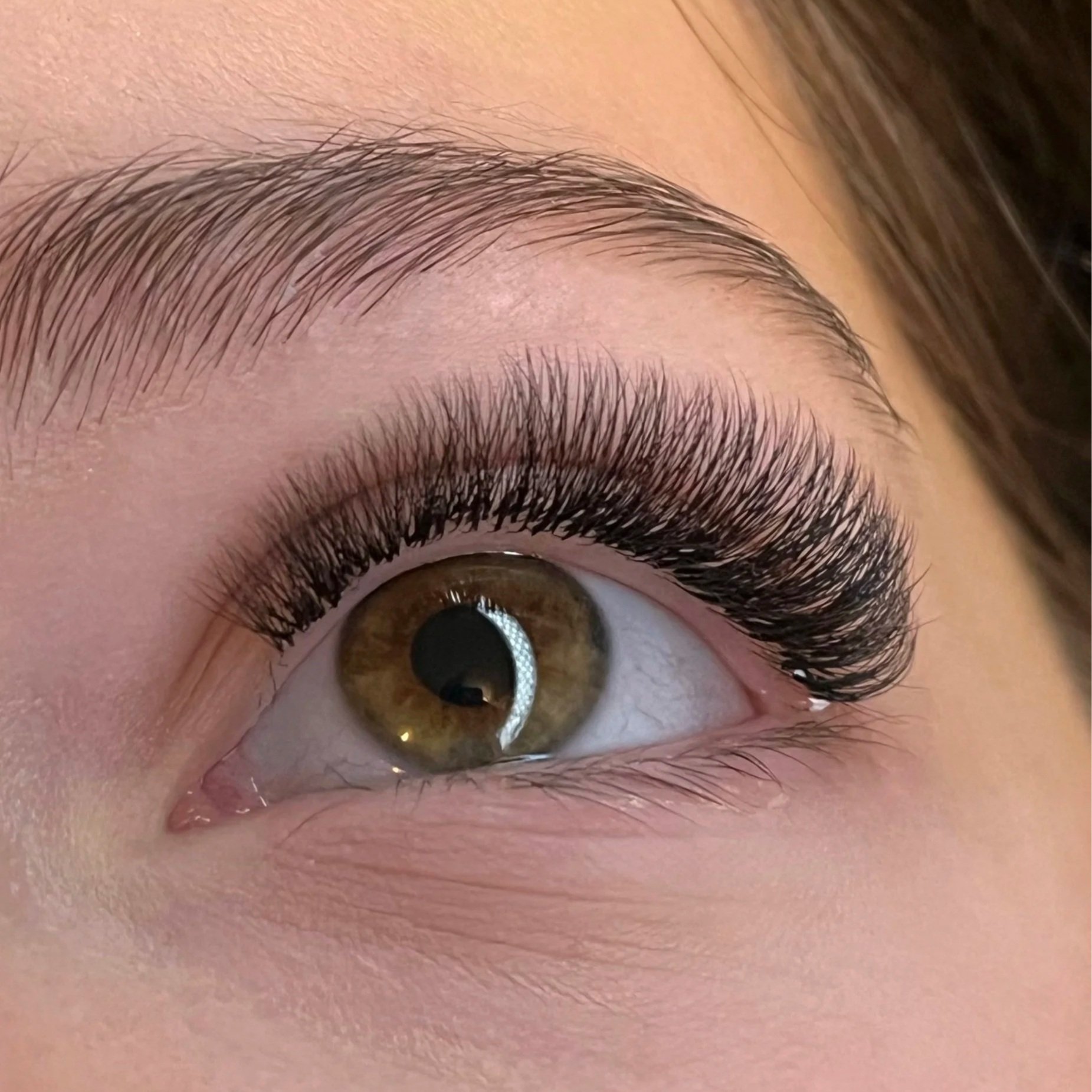
A client would rather spend longer receiving safely applied, beautiful lashes than leave quickly with poor isolation and uncomfortable extensions.
Work towards becoming more efficient, but build that efficiency on good technique.
Your early sets may take hours.
That is part of learning.
With repetition, movements become more natural, your setup becomes more organised and decisions become faster.
Eventually, you stop thinking about every tiny movement.
That is where speed begins to come naturally.
Ready to Improve Your Lash Skills?
If you are at the beginning of your lash career, my Online Lash Course teaches Classic, Hybrid and Premade Volume techniques step by step.
It is designed for complete beginners and includes lifetime access and personal support, so you can continue asking questions while you practise and develop your technique.
