How to Choose Your First Lash Extension Course
Choosing your first lash extension course can feel overwhelming. There are online courses, one-day workshops, private training, group classes and courses covering everything from Classic lashes to advanced Volume techniques.
If you are completely new to lashes, it can be difficult to know which course will actually give you the skills you need to start.
Your first lash course is important because it creates the foundation for everything you learn afterwards. Good training should teach you safe application and strong technique, not simply show you how to attach extensions.
Here is what I recommend looking for when choosing your first lash extension course.
Start With a Course Designed for Complete Beginners
Your first course should not assume that you already understand eyelash extensions.
A proper beginner course should explain the fundamentals from the beginning, including natural lash growth, lash extension products, hygiene, isolation, adhesive control and correct placement.
Be cautious of courses that focus heavily on creating impressive-looking sets but spend very little time teaching the technical foundations.
Beautiful styling becomes much easier once your basic technique is strong.
Check Exactly What the Course Teaches
Do not choose a course based only on its title or promotional photos.
Look at the actual curriculum.
A comprehensive beginner lash course should normally cover topics such as:
natural lash health and growth
hygiene and safe working practices
client consultation
lash curls, lengths and thicknesses
isolation
adhesive and environmental factors
correct extension placement
direction and attachment
lash mapping and styling
Classic lash technique
infills
safe removal
aftercare
troubleshooting common problems
Some beginner courses also include Hybrid and Volume techniques.
Knowing exactly what is included makes it much easier to compare different courses properly.
Should Your First Course Teach Classic Lashes?
I strongly believe Classic lashes are an important foundation.
With Classic application, you learn to isolate one natural lash and attach one extension correctly. This develops the precision you need for almost every other lash technique.
You learn adhesive control, distance from the eyelid, attachment, direction and how to work systematically across the lash line.
Once these skills become stronger, moving into Hybrid and Volume techniques becomes much easier.
A course that teaches multiple techniques can be valuable, but it should not rush past the fundamentals simply to offer a longer list of techniques.
Online or In-Person Lash Training: Which Should You Choose?
Both formats can work well for beginners.
Online lash training gives you flexibility. You can study around work or family commitments, replay demonstrations and return to lessons whenever you need them.
This can be particularly useful when learning detailed techniques because you are not expected to remember everything after watching a demonstration once.
In-person training gives you immediate physical guidance. An educator can watch how you hold your tweezers, position your hands, isolate lashes and attach extensions.
If you are unsure which format would suit you, I have a detailed comparison of online vs in-person lash training that explains the advantages of each.
Private or Group Lash Training?
If you choose in-person training, also check how many students will be in the class.
Group training can be a more affordable way to learn and some students enjoy learning alongside others.
Private one-to-one training provides much more individual attention.
Your educator can watch your technique closely, identify exactly where you are struggling and adjust the training to your progress.
Neither format automatically guarantees better education, so consider how you personally learn best.
Does the Lash Educator's Experience Matter?
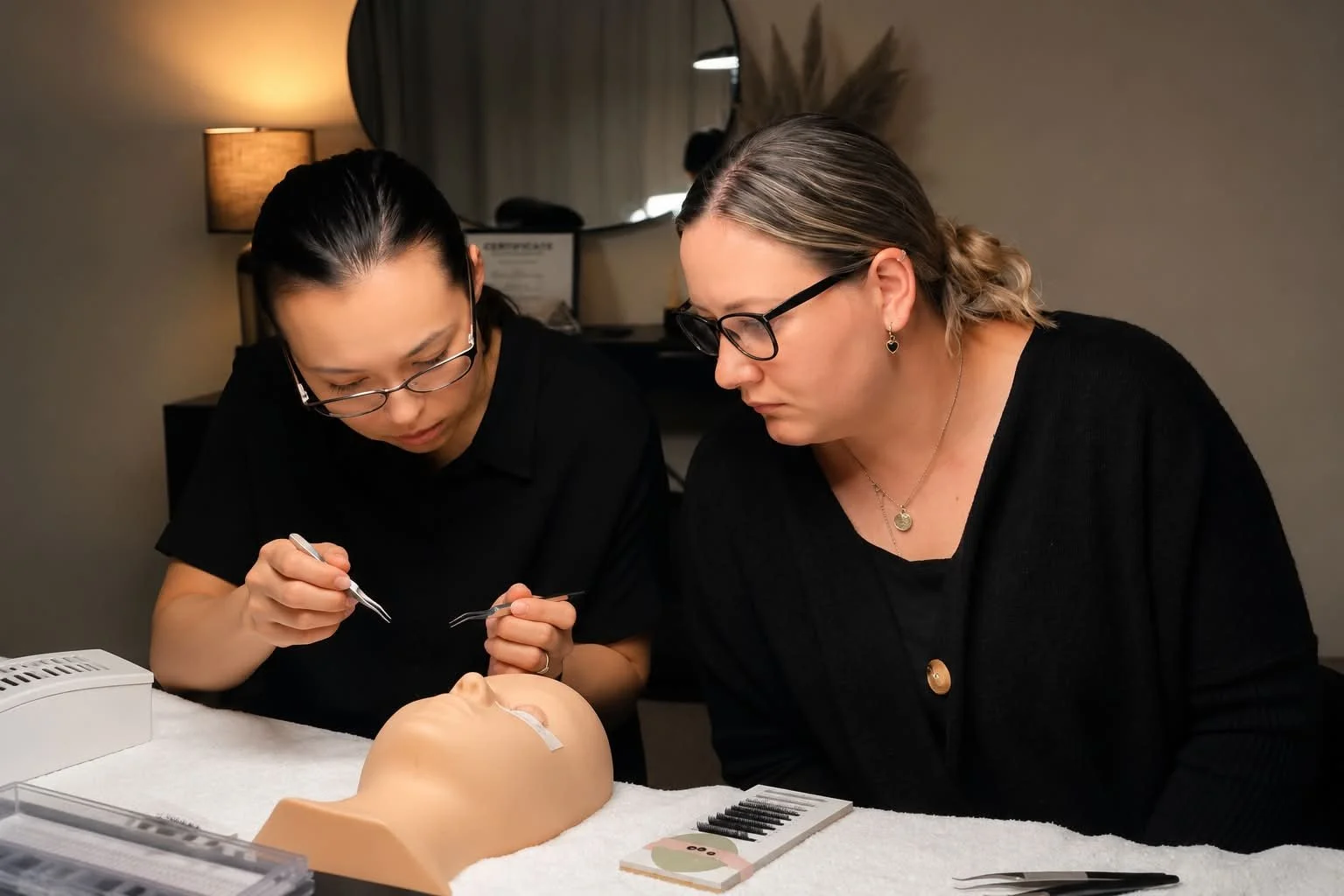
Yes, and I would look beyond how many followers an educator has on social media.
Check how long they have actually been working with clients, whether they still perform lash services, how long they have been teaching and whether you can see consistent examples of their work.
A skilled lash artist is not automatically a skilled educator, either.
Teaching requires being able to explain why something is going wrong and help a student correct it.
I have worked in the New Zealand lash industry for more than 12 years and have been training lash students for 8 years. Experience has shown me that many beginner problems are very small technical details that students often cannot identify themselves.
Look Carefully at the Educator's Lash Work
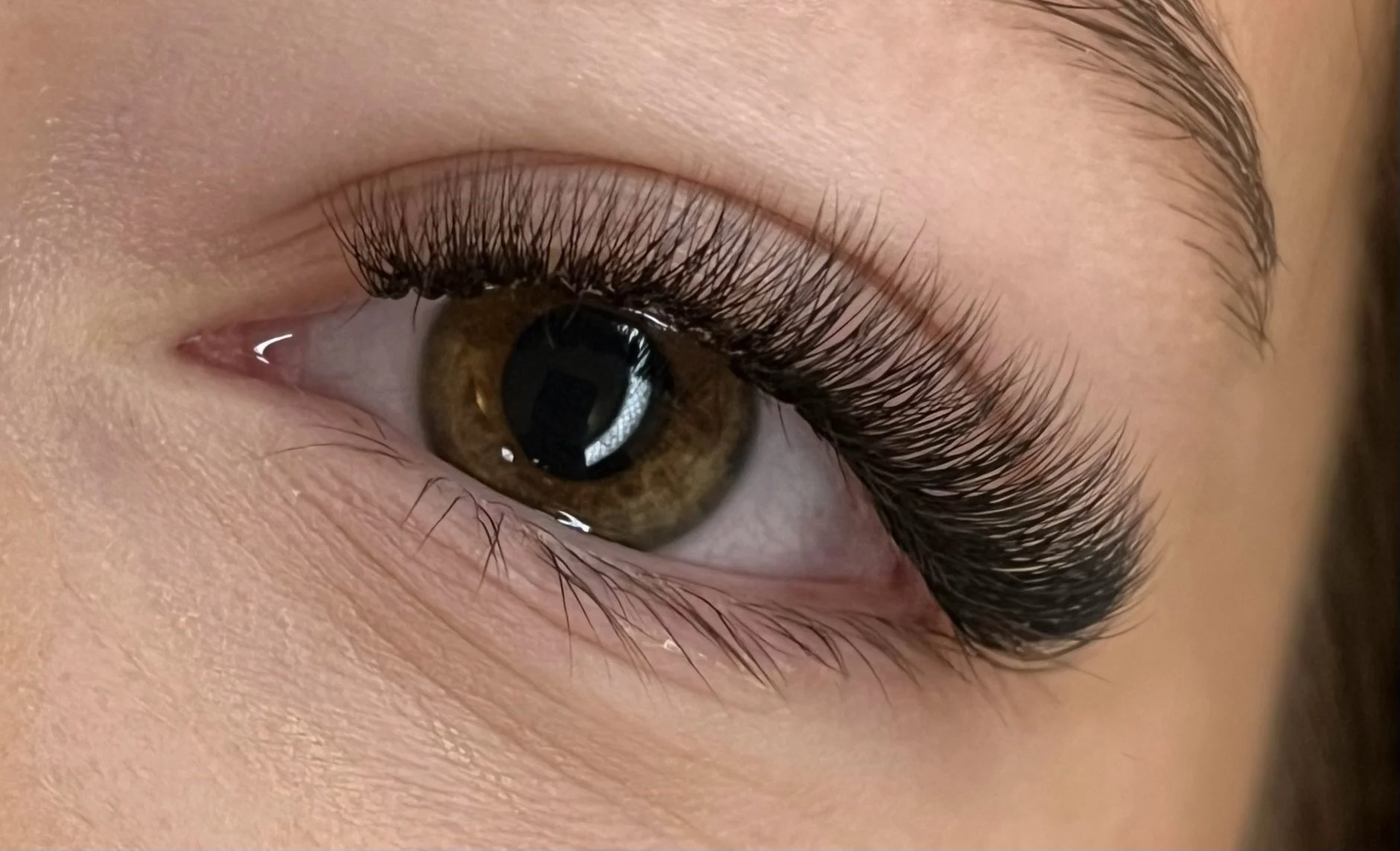
Before enrolling, look at the educator's actual portfolio.
Do you like the quality and style of their work?
Look for clean application, consistent direction, appropriate styling and results that suit different clients rather than identical sets on every person.
You are learning techniques from this person, so their work should represent a standard you would be happy to develop towards.
Do not judge solely by heavily edited or distant photographs. Clear close-up images can tell you much more about the quality of lash work.
Does the Course Include Practical Training?
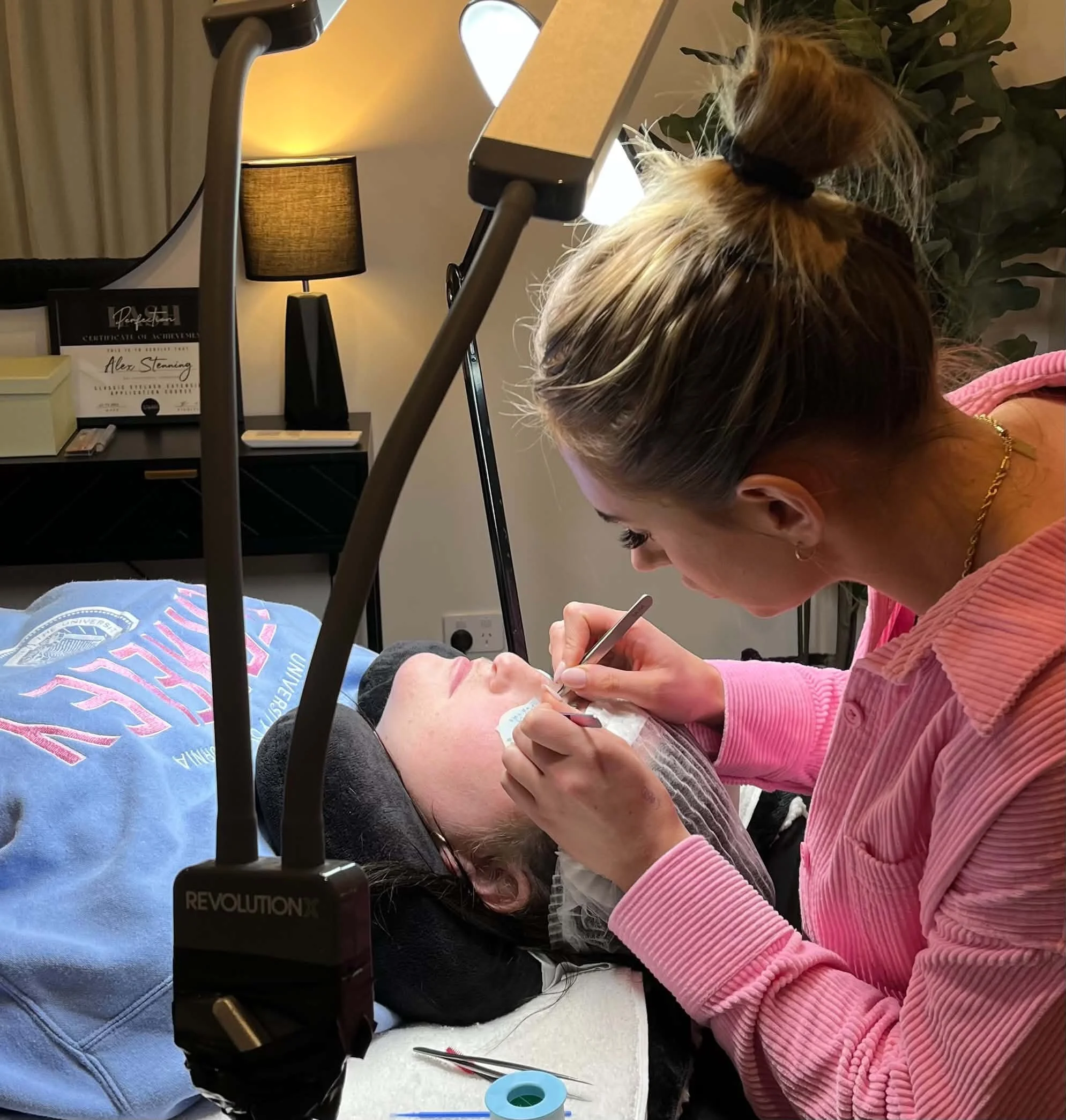
Eyelash extensions are a hands-on skill.
Theory is essential, but ultimately you need to practise using tweezers, isolating lashes and applying extensions.
For online training, check whether the course gives clear practical demonstrations and exercises you can follow while practising independently.
For in-person training, find out how much of the course is actually spent practising.
If live models are included, that can be particularly useful because working on real natural lashes is very different from practising only on a mannequin.
Will You Receive Feedback on Your Work?
This is one of the most important things to check.
When you first start practising, it can be difficult to see your own mistakes.
You may think your attachment is correct when the base is lifting, or you may not notice that your direction is inconsistent.
Being able to send photos, ask questions and receive feedback can help prevent you from repeatedly practising the same mistake.
Before enrolling, find out exactly what support is available and whether it continues after you finish the initial lessons.
How Long Will You Have Access to the Course?
This is especially important with online training.
You are unlikely to remember everything after watching a lesson once.
As you begin practising, different parts of the training suddenly become more relevant. You may return to adhesive lessons when retention becomes a problem, or revisit styling once your basic placement improves.
Check whether access lasts a few weeks, several months or indefinitely.
My Online Lash Course includes lifetime access so students can return to the lessons throughout their development.
Does Your First Lash Course Include a Starter Kit?
Some courses include a kit, some offer one separately and others expect you to purchase all products yourself.
A kit can make starting easier because you do not need to work out which products are actually necessary.
However, look at what the kit contains rather than judging it by the number of items.
A smaller kit containing professional products you will genuinely use can be more valuable than a large kit filled with unnecessary extras.
If you are purchasing your own products, my beginner lash kit checklist explains the main equipment and supplies you need to start.
How Much Should Your First Lash Course Cost?
Lash training prices can vary significantly.
Online courses are generally less expensive because they do not require an educator to spend multiple hours physically teaching each student.
Private in-person training is usually more expensive because you are paying for direct educator time, practical supervision and often a professional kit.
Price should certainly be considered, but I would not choose your first course purely because it is the cheapest.
Compare the curriculum, educator experience, practical training, support, course access and products included.
I have a separate guide explaining how much lash courses cost in New Zealand if you want to compare the different training options in more detail.
Be Careful With Very Short Lash Courses
It is possible to learn a lot during an intensive training day, but becoming competent at eyelash extensions requires practise after the course.
Be cautious if a course suggests you will become a fully confident professional after only a few hours.
A training session can teach you the technique, but your hands still need time and repetition to develop control.
The support available after the course can therefore be just as important as the number of hours spent in the classroom.
What Does Lash Certification Actually Mean?
You may see terms such as certified, accredited or qualified used when advertising lash courses.
These terms do not always mean the same thing.
There is not one specific national lash qualification or licence that every eyelash extension technician in New Zealand must hold.
If accreditation is important to you, ask exactly who has accredited the course and what that accreditation represents.
Also check what you need to complete before receiving your certificate.
My students receive a Certificate of Completion after successfully completing the required training.
Check Student Reviews and Results
Reviews can tell you a lot about the learning experience.
Look specifically for reviews from students rather than only lash clients.
Useful reviews may mention whether the educator explained things clearly, responded to questions, provided helpful feedback and continued supporting students after training.
Student work can also help you understand what people are achieving after completing the course.
Remember that every student's progress will be different, so training should never promise identical results or guaranteed income.
Think About What Happens After the Course
Your education should not necessarily end when the course does.
After training, you will begin practising independently and that is often when the most questions appear.
You may suddenly struggle with retention, direction, stickies or styling.
Knowing that you can contact your educator during this stage can make the learning process much less frustrating.
Ongoing support was something I deliberately included in my own training because I know how many questions arise once students begin working by themselves.
What Are the Red Flags When Choosing a Lash Course?
Be cautious if you see:
unrealistic income promises
claims that you will become an expert immediately
very little information about the curriculum
no examples of the educator's own lash work
unclear information about support
excessive emphasis on receiving a certificate rather than developing practical skills
pressure to enrol immediately without enough information about what you are buying
A professional educator should be comfortable explaining exactly what the training includes.
Questions to Ask Before Booking Your First Lash Course
Before paying for a course, consider asking:
Is this suitable for complete beginners?
Which techniques will I learn?
How much practical training is included?
Will I work on live models?
Can I receive feedback on my work?
How long will I have access to the training?
Is a starter kit included?
What support is available afterwards?
What certificate will I receive?
Who will actually be teaching me?
The answers should help you compare courses much more effectively than price alone.
Which Lash Course Is Right for You?
The right course depends on your learning style, budget, location and goals.
If you like learning independently and need flexibility, a comprehensive online course with educator support may suit you very well.
If you prefer someone physically watching your technique, private or small-group practical training may be worth the additional investment.
For students who want hands-on guidance, I offer private one-to-one lash training in Christchurch, combining online theory with four practical training sessions, live model work, a professional starter kit and ongoing support.
For students who want flexibility, my Online Lash Course teaches Classic, Hybrid and Premade Volume with lifetime access and personal support.
The most important thing is not simply choosing the fastest or cheapest course.
Choose training that gives you strong foundations, clear demonstrations, opportunities to practise and access to help while your skills develop.
Ready to Choose Your First Lash Course?
If you are starting from the beginning, my Online Lash Course is designed for complete beginners and takes you step by step through Classic, Hybrid and Premade Volume techniques.
You'll receive lifetime access, personal support and a Certificate of Completion, allowing you to learn at your own pace and continue returning to the training as your skills develop.
