10 Mistakes Beginner Lash Artists Make
Learning eyelash extensions is exciting, but the beginning can also feel overwhelming.
You are trying to control two tweezers, isolate tiny natural lashes, manage adhesive, create clean placement, follow a lash map and somehow make the finished set look beautiful at the same time.
Mistakes are part of learning.
After more than 12 years working in the lash industry and 8 years teaching lash students, I have seen many beginners struggle with the same problems. Most of them are completely fixable once you understand what is going wrong.
Here are 10 common mistakes beginner lash artists make and what you can do instead.
1. Rushing Isolation
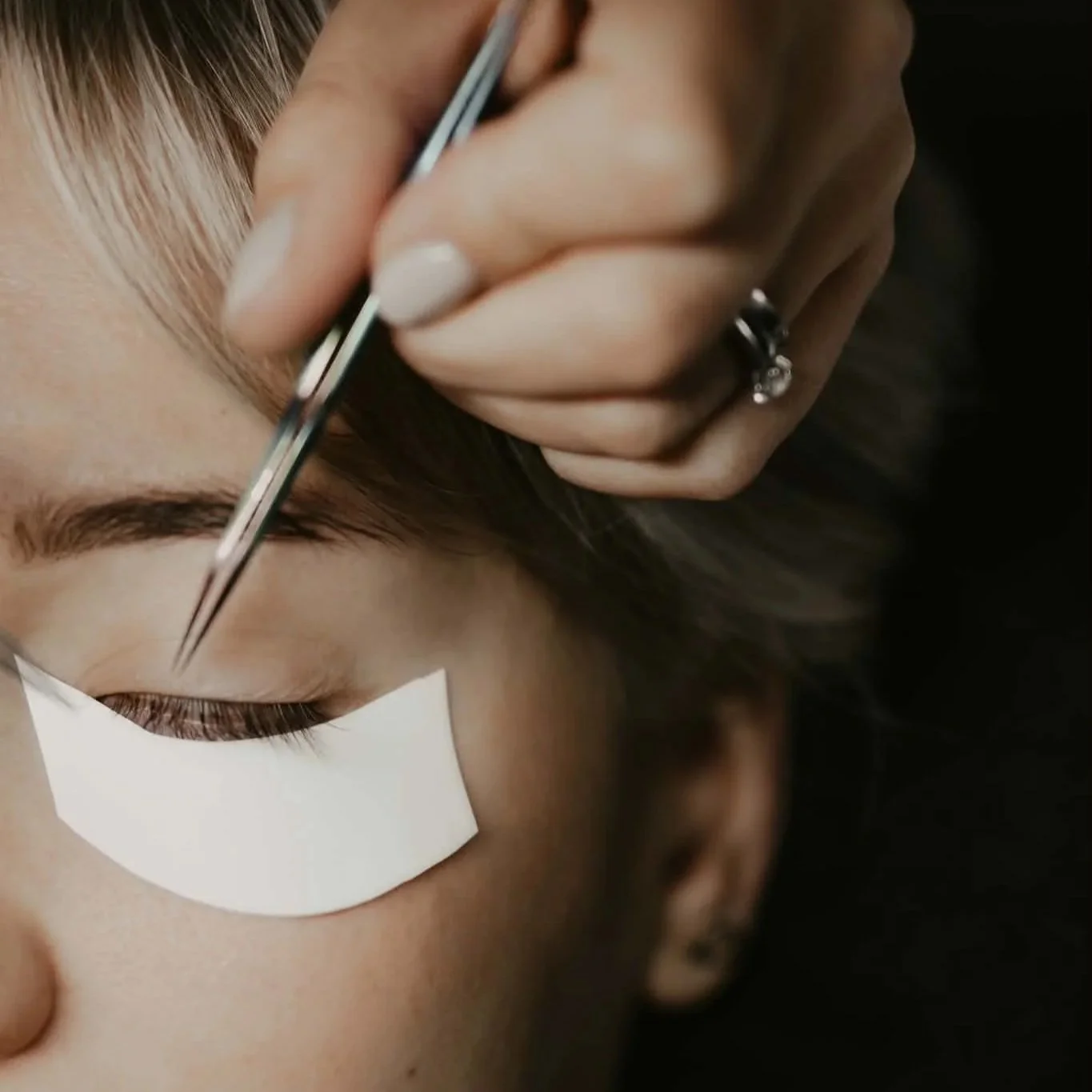
Isolation is one of the most important skills you will learn as a lash technician.
Each extension should be applied to an individual suitable natural lash. If neighbouring lashes become attached together, they can create stickies.
Natural lashes grow at different rates. When two growing lashes are stuck together, this can create pulling, discomfort and potentially affect the natural lashes.
Beginners often rush isolation because they are worried about how long the appointment is taking.
Do the opposite.
Slow down and make clean isolation your priority. Speed will develop later as your hands become more experienced.
2. Using Extensions That Are Too Heavy or Too Long
It is tempting to create dramatic sets when you first start doing lashes.
But not every natural lash can safely support every extension.
A professional lash artist needs to assess the client's natural lashes and choose suitable lengths, diameters and weights.
Longer and thicker does not automatically mean better.
Your goal should be to enhance the client's eyes while respecting the natural lashes you are working with.
Understanding safe lash selection is much more important than trying to create the biggest set possible.
3. Using Too Much Adhesive
More adhesive does not necessarily create better retention.
Using excessive adhesive can make your application bulky, increase the chance of neighbouring lashes sticking together and make it harder to create clean attachment.
Using too little can also cause problems.
Beginners need time to learn what the correct amount of adhesive looks and feels like with their particular products and working environment.
Pay attention to your adhesive pickup during practise rather than automatically taking a large bead.
Controlled adhesive use is a skill that improves with repetition.
4. Placing Extensions Too Close to the Eyelid
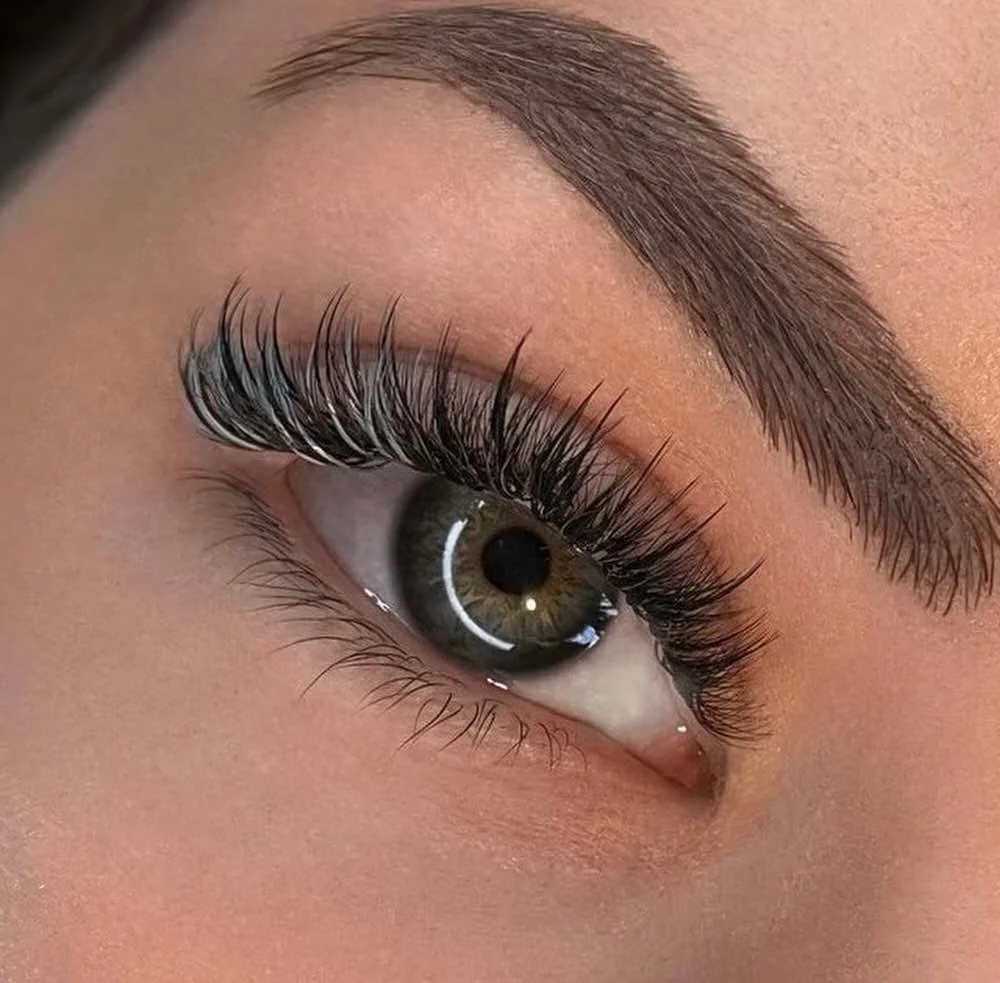
Extensions should not be glued directly onto the skin.
Placing them too close to the eyelid may cause discomfort or irritation, while placing them too far away can make the set look grown out immediately.
Finding a consistent and appropriate distance from the eyelid takes practise.
This is one of the reasons close-up photographs of your work are so useful. A photo can reveal inconsistent placement that is difficult to notice while you are concentrating on completing the set.
Do not judge your work only by how it looks from the front.
Look closely at your bases and attachment too.
5. Focusing on Speed Too Early
One of the biggest pressures beginners put on themselves is trying to become fast.
You see experienced lash artists completing beautiful sets efficiently and wonder why your own set is taking so long.
Remember that experienced technicians have repeated the same movements thousands of times.
When you are learning, concentrate on:
isolation
placement
adhesive control
direction
checking for stickies
natural lash safety
Once these skills become more automatic, your speed can improve naturally.
Trying to rush before your technique is reliable often creates more mistakes and more work to correct later.
If you are worried about your progress, read my guide on how long it takes to get good at lash extensions.
6. Not Checking for Stickies Properly
Checking your work should be part of every lash appointment.
Even experienced technicians can occasionally create a sticky during application. The important thing is finding and separating it before the client leaves.
Beginners sometimes finish the visible part of the set and assume the appointment is complete.
It isn't.
Leave yourself enough time at the end to carefully work through the lash line and check that lashes are moving independently.
Do not sacrifice this step because the appointment has taken longer than expected.
7. Changing Products Every Time Something Goes Wrong
When retention is poor or application feels difficult, it is easy to blame the adhesive, tweezers, lashes or primer immediately.
Sometimes a product really is not suitable for your environment or technique.
But constantly changing products can make learning harder because you never become familiar with how one system behaves.
Before buying another adhesive, look at your application.
Was the natural lash properly prepared?
Was your attachment clean?
Was your adhesive behaving normally?
Was the extension attached securely to the natural lash?
Were your temperature and humidity suitable for the adhesive you were using?
Products matter, but technique matters too.
Learn how your products behave before constantly replacing them.
8. Comparing Your Beginner Work to Experienced Lash Artists
Social media can make learning lashes unnecessarily stressful.
You may be looking at work created by someone who has been doing eyelash extensions for five, ten or even fifteen years and comparing it with your fifth practice set.
That is not a useful comparison.
Instead, compare your current work with your own previous work.
Take photographs of your sets and look for specific improvements.
Is your direction cleaner?
Are you completing more of the lash line?
Are your bases improving?
Is your styling becoming more balanced?
That is a much better way to measure progress.
Regular, structured practise is one of the most important parts of improving. I have a separate guide explaining how to practise lash extensions as a beginner.
9. Practising Without Asking for Feedback
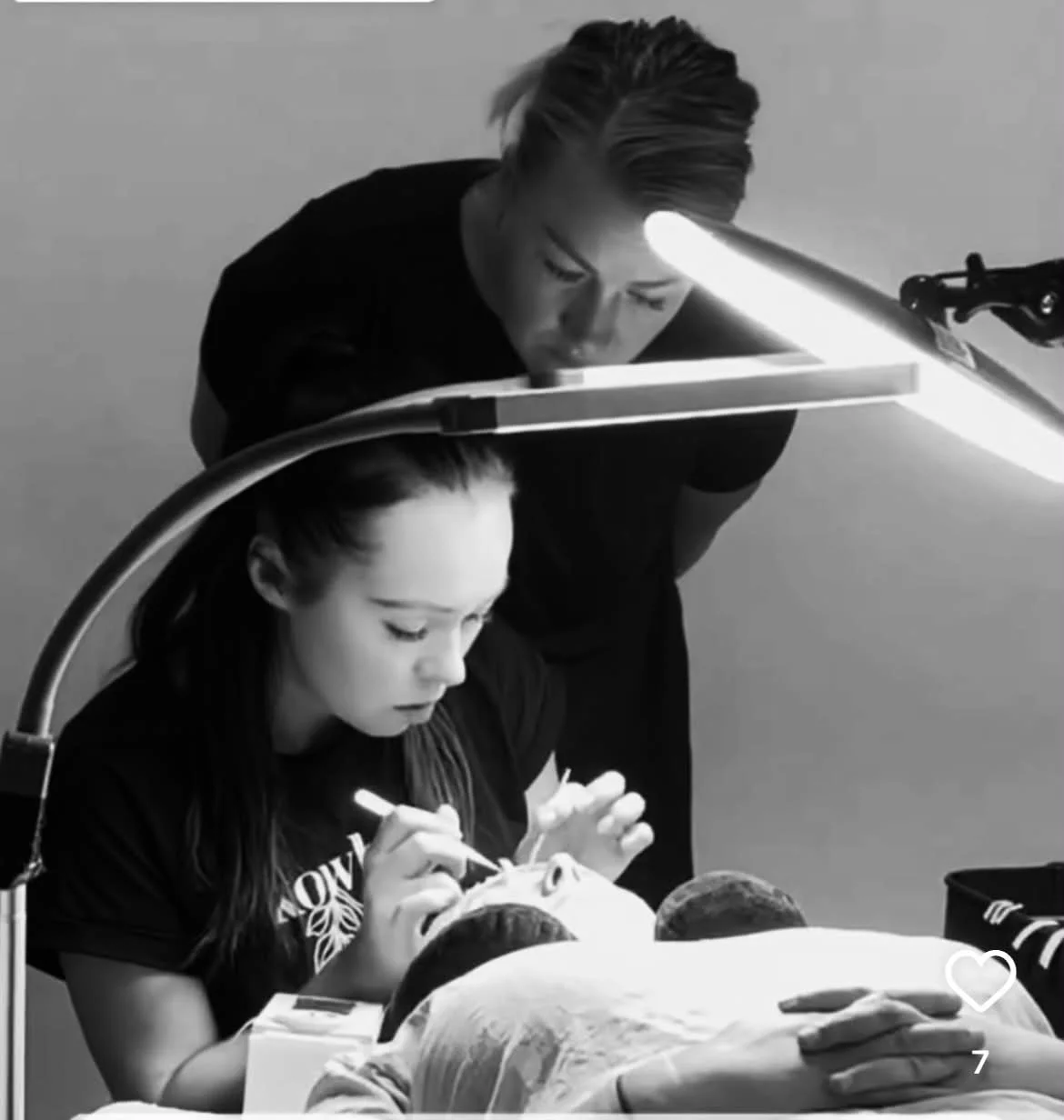
Practice is important, but simply repeating the same mistake can reinforce a bad habit.
This is where educator feedback becomes valuable.
When possible, send clear close-up photographs of your work and ask specific questions.
Instead of asking, “Are these good?”, ask something such as:
“Does my direction look consistent?”
“Am I placing my extensions too far from the eyelid?”
“Why do some of my bases look lifted?”
Specific questions make it easier for your educator to identify what needs improvement.
My Online Lash Course includes personal support because I believe beginner students benefit from being able to ask questions while they are actually practising.
10. Expecting to Be Professional Immediately After Training
Completing a lash course gives you the foundation to begin developing your skills.
It does not mean you should expect your work to immediately look like that of someone with years of experience.
There is a difference between learning a technique and mastering it.
Your training should teach you how to work safely, understand the products and perform the techniques correctly.
Then comes practise.
You will work on different natural lashes, different eye shapes and different clients. You will encounter retention problems, difficult inner corners, unusual growth directions and situations you did not see during training.
Each one adds to your experience.
Give yourself permission to be a beginner.
Bonus Mistake: Trying to Learn Everything at Once
There are endless lash techniques, styling methods, curls, products and trends available.
You do not need to master all of them immediately.
Build strong foundations first.
Learn good isolation.
Understand placement.
Develop adhesive control.
Learn how to select suitable extensions.
Become comfortable creating a clean, safe lash set.
Once those fundamentals are reliable, adding new techniques becomes much easier.
If you have not chosen your training yet, my guide on how to choose your first lash extension course explains what beginners should look for before enrolling.
What Should Beginner Lash Artists Focus on Instead?
Rather than trying to create perfect Instagram-worthy sets immediately, focus on becoming consistent.
A good beginner routine is simple.
Practise regularly.
Photograph your work.
Ask for feedback.
Choose one weakness at a time and work on improving it.
Keep your products and working setup reasonably consistent while you learn.
And prioritise safe application over speed.
The small improvements you make during each practice session eventually add up.
Mistakes Are Part of Becoming a Better Lash Artist
Every experienced lash artist was once a beginner.
You will make mistakes while learning, and some practice sets will be better than others.
What matters is whether you recognise those mistakes, understand why they happened and correct them.
I have been working in the lash industry for more than 12 years, and one of the biggest differences I see between students who progress and those who become frustrated is how they respond when something goes wrong.
Do not treat a difficult set as proof that you cannot do lashes.
Treat it as information.
Find the problem, correct it and practise again.
That process is how your technique develops.
Ready to Learn Lash Extensions Properly?
My Online Lash Course is designed for complete beginners and teaches Classic, Hybrid and Premade Volume techniques step by step.
You'll receive lifetime access and personal support, so you can continue asking questions and using the training while your technique develops.
