How to Know When You're Ready to Take Paying Lash Clients
Moving from practising eyelash extensions to charging your first paying clients can feel like a huge step.
Almost every beginner wonders:
Am I actually good enough to charge someone yet?
You may have completed your lash training, worked on several models and started producing sets you are proud of, but still feel nervous about accepting money.
That nervousness is normal.
Being ready does not mean you suddenly feel completely confident or that every set you create is perfect.
It means you have developed the fundamental skills to provide a safe, professional and presentable service consistently enough to begin working with clients.
After more than 12 years working as a lash technician and years training lash students, I believe there are much better ways to judge readiness than simply counting how many models you have completed.
Here is what I would look for.
1. You Can Isolate Natural Lashes Properly
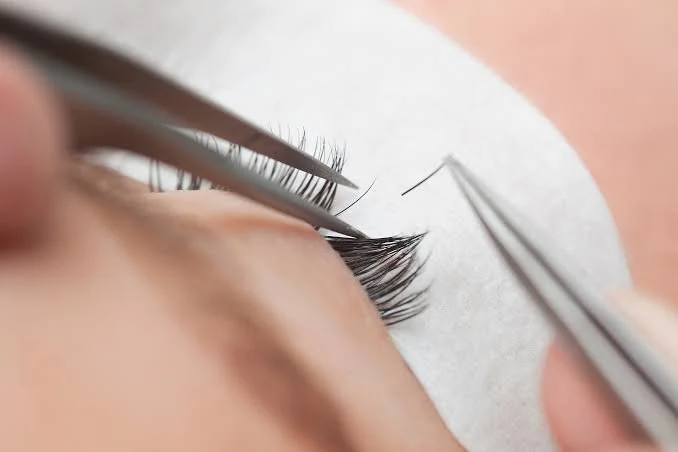
Isolation is one of the most important foundations of eyelash extension application.
Each suitable natural lash should be separated so the extension can be applied without accidentally attaching neighbouring lashes together.
Poor isolation can cause discomfort and can interfere with the natural growth cycle when lashes growing at different rates become stuck together.
Before taking regular paying clients, you should be able to isolate consistently and check your finished work carefully for stickies.
You may not be extremely fast yet.
That is okay.
Accuracy comes first.
2. Your Placement Is Safe and Consistent
Extensions need to be positioned correctly rather than attached randomly along the natural lash.
You should understand appropriate attachment, distance from the eyelid, direction and how to work safely around the eye area.
If extensions are touching the skin or your placement is frequently inconsistent, continue practising before focusing on paid appointments.
A beautiful photograph is not enough.
The application underneath needs to be technically sound.
3. You Can Control Your Adhesive
Adhesive control takes practise.
Beginners commonly struggle with using too much or too little product.
You should be developing consistency in:
picking up the appropriate amount of adhesive
creating a clean attachment
avoiding large visible glue beads
working efficiently enough for your adhesive
storing and handling your products correctly
You do not need years of experience, but you should understand how the adhesive you use behaves in your working environment.
4. You Understand Natural Lash Safety
Not every natural lash should automatically receive the same extension.
You need to consider the natural lash's length, strength and condition when selecting an appropriate extension.
Your styling plan should never override natural lash safety.
If a particular natural lash cannot safely support the extension you originally intended to use, adjust your plan.
Being able to make those decisions is part of becoming a professional lash technician.
5. You Can Complete a Presentable Full Set
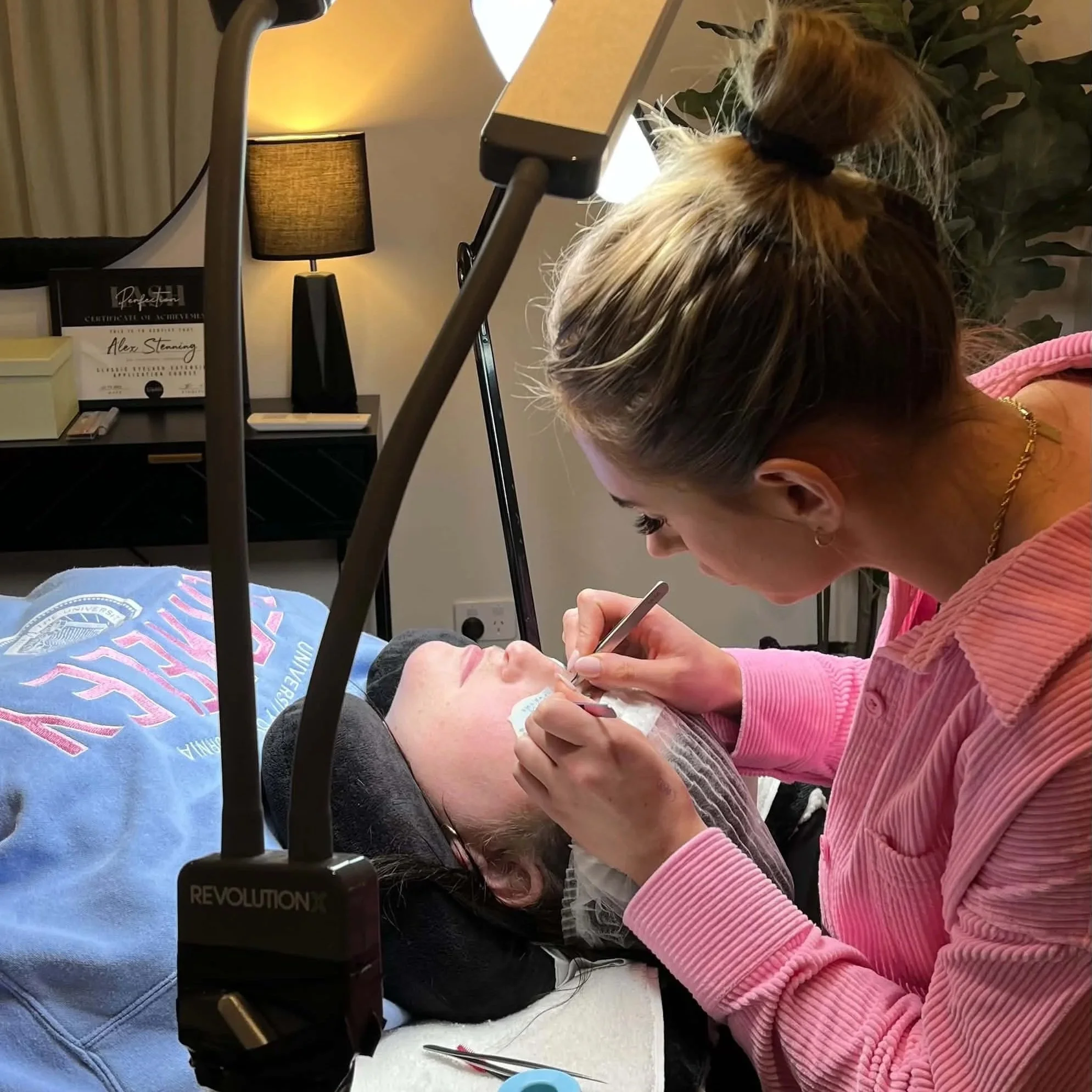
Your first paying sets do not need to look like the work of someone with ten years of experience.
But they should look professional enough that a client can reasonably be happy with the service she has paid for.
Look at your recent model sets rather than your single best photograph.
Are the results becoming consistently:
clean
balanced
well directed
appropriately styled
evenly covered
comfortable
Consistency matters more than producing one amazing set followed by three poor ones.
6. You Can Work on Different Natural Lashes
If you have only ever practised on one person, you may not yet have experienced how different natural lashes can be.
Try working on several models.
You may encounter:
fine lashes, dense lashes, multiple layers, downward-growing lashes, sparse areas, different eye shapes and different natural lash directions.
That variety develops your problem-solving ability.
A paying client will not necessarily arrive with the easiest natural lashes you have ever worked on.
7. You Understand Basic Lash Styling
You do not need to master every advanced lash map before taking your first client.
But you should understand the basics of choosing appropriate lengths and creating a balanced shape.
You should be able to look at the client's eyes, discuss the desired result and create a sensible plan rather than automatically using exactly the same map on everyone.
If styling still feels confusing, my guide to lash mapping for beginners explains where to start.
8. You Know How to Prepare and Clean the Natural Lashes
Good application begins before you attach the first extension.
You should understand how to prepare the natural lashes appropriately for the service and why cleanliness matters.
Your preparation process should be consistent rather than something you occasionally remember after you have already started.
You should also understand when a service should not proceed and when a client may need appropriate medical advice rather than a lash appointment.
9. You Have a Professional Hygiene Routine
Taking money means taking responsibility for providing a professional service.
Your workspace and tools need an appropriate hygiene process.
You should understand how to handle reusable tools, disposable items, clean linen, hand hygiene and your working surfaces.
Do not wait until you are busy to create these routines.
Build them while you are still practising so they become automatic.
10. You Can Conduct a Basic Client Consultation
A lash appointment should not begin with the client lying down while you immediately start applying extensions.
You need to understand what she wants.
Ask about her preferred result and relevant service considerations.
Look at her natural lashes.
Discuss realistic expectations.
Explain anything important about the appointment.
A good consultation helps prevent misunderstandings later.
Sometimes the lashes a client shows you in an inspiration photograph may not be appropriate or achievable in exactly the same way on her natural lashes.
You need to be comfortable explaining that professionally.
11. You Understand Aftercare
Clients will ask you questions.
Can I get them wet?
How should I clean them?
When should I come back?
What if I lose some lashes?
You should understand the aftercare guidance relevant to the products and techniques you use and be able to explain it clearly.
Do not simply memorise one social media graphic.
Understand why appropriate cleaning and maintenance matter.
12. You Know How to Remove Extensions Safely
Applying extensions is only part of the service.
At some point, a client may need a professional removal.
You should understand the removal process and how to use the professional remover intended for your system safely.
Do not pull or pick extensions from natural lashes.
If removal was not adequately covered in your training, learn it before offering it as a service.
13. You Can Find and Fix Stickies
Before finishing an appointment, you should check your work.
Natural lashes can become accidentally attached during application.
Learning to identify and separate stickies is an essential habit.
Do not rely on the client telling you later that something feels uncomfortable.
Build checking into every appointment.
Your finishing routine is part of your application technique.
14. Your Retention Is Becoming Reasonable
You do not need every extension to remain until the natural lash sheds.
Lash retention is affected by many factors, including the natural lash cycle, client care, preparation, attachment and working conditions.
But if most of your model's extensions are falling off very quickly, investigate why before building a diary of paying clients.
Look at your attachment and preparation first.
Use your model appointments as an opportunity to follow up and learn how your work actually wears.
A set can look beautiful immediately after application but still reveal technical problems several days later.
15. You Can Finish Without Rushing
Speed matters eventually, but it should not determine whether you are ready to charge.
A beginner set may still take several hours.
What matters more is whether you can work carefully for the entire appointment without becoming so tired or pressured that your technique deteriorates.
I explain beginner appointment timing in how long a beginner lash set should take.
If you still need longer appointments, allow enough time in your booking schedule.
Do not advertise a 90-minute service if you consistently need three hours.
16. You Have Practised Enough to See Patterns
There is no magic number of models that makes someone ready.
One student may progress quickly with frequent, focused practise.
Another may need considerably more repetition.
Instead of asking:
“Have I done enough models?”
ask:
“Am I repeatedly seeing safe, consistent results?”
You should begin recognising your own common mistakes.
Perhaps your inner corners need work.
Maybe your direction becomes inconsistent on one side.
Perhaps you still struggle with isolation in dense areas.
Recognising those patterns is a sign that you are learning to evaluate your own work.
For a structured approach, read how to practise lash extensions as a beginner.
17. You Can Take Constructive Feedback
Professional development does not end when you receive a certificate.
If an educator identifies something that needs improvement, use the feedback.
If a client mentions that a particular area did not retain well, investigate it.
If your photographs show inconsistent direction, work on it.
Being ready for clients does not mean believing your work is already perfect.
It means being capable of recognising problems and continuing to improve.
18. You Have Your Basic Professional Setup Ready
Before charging clients, make sure you actually have the products and equipment required to provide the service professionally.
You do not need every lash product available on the market.
You do need reliable essentials.
That includes appropriate tweezers, lashes, adhesive, preparation products, eye pads, tape, disposables, lighting and the other supplies required for your services.
If you are still putting your setup together, see what should be included in a professional lash starter kit.
19. You Know What You're Going to Charge
You do not need the perfect long-term pricing strategy before accepting your first client.
You do need a clear price.
Many beginners start with an introductory price while they continue improving their speed and building their portfolio.
Make sure clients know the price before the appointment.
Avoid deciding what to charge after the service based on how you feel about the result.
Your pricing can develop as your skills and business grow.
I explain this in how to price lash extensions when you're starting out.
20. You Have a Simple Booking Process
Your first booking system does not need to be complicated.
But clients need to know:
what services you offer
how much they cost
where you are located
how to book
how long to allow
your important booking conditions
A professional process builds trust before the client even arrives.
It also saves you from repeatedly answering the same basic questions.
21. You Are Ready to Behave Like a Professional
This is just as important as technique.
If someone is paying you, treat the appointment professionally.
Be ready on time.
Keep your workspace clean.
Communicate clearly.
Do not cancel casually.
Listen to what the client wants.
Keep appropriate boundaries.
Respect her time.
A beginner can still provide an excellent professional experience.
You do not need 12 years of experience to be reliable.
What If You Still Feel Nervous?
You probably will.
Your first paying client feels different from a model.
Suddenly someone has given you money and expects a result.
That can make you question skills you were perfectly comfortable performing the day before.
Do not use nervousness alone as evidence that you are not ready.
Instead, look objectively at your recent work.
Is it safe?
Is your technique becoming consistent?
Do your models like the results?
Is your retention developing?
Can you provide the service professionally?
If yes, you may simply be experiencing the normal discomfort of doing something new.
Should Your First Clients Pay Full Price?
Not necessarily.
An introductory price can be a sensible bridge between free models and your eventual normal pricing.
It acknowledges that you are still building speed and experience while placing value on your time and work.
Be transparent about what you are offering.
Then, as your skills, speed, demand and confidence develop, review your prices.
How Do You Find Those First Paying Clients?
Start close to your existing network.
Models, friends, referrals and local contacts can help you begin.
Build a portfolio from your best genuine work.
Make your location and booking information clear.
Ask happy clients for genuine reviews.
Encourage rebooking.
Your first goal is not to become fully booked overnight.
It is to build a small group of clients who are happy to return and recommend you.
I have a complete guide on how to get your first lash clients if you are at this stage now.
You Don't Need to Be Perfect to Start
There is an important difference between:
“I am still learning.”
and
“I am not ready to provide this service safely.”
Every lash technician continues learning.
Even after years in the industry, you still refine techniques, test products, adapt styling and learn from clients.
You do not need perfection before accepting your first paying client.
But you do need safe fundamentals, professional standards and enough practical experience to provide a service you are comfortable putting your name behind.
If those foundations are not there yet, keep practising.
There is no shame in taking more time.
If they are there and the main thing stopping you is fear, your next stage of learning may come from beginning to work with real clients.
From Lash Student to Lash Technician
The transition happens gradually.
First, you learn the theory.
Then you practise individual skills.
Then you work on models.
Your sets improve.
Your timing improves.
You start understanding styling.
You recognise mistakes faster.
Eventually, you realise that you are no longer simply trying to remember every step.
You are actually performing a professional service.
That is when the next part begins: building your client base and continuing to improve with every appointment.
Ready to Start Your Lash Career?
If you are still at the beginning, my Online Lash Course is designed for complete beginners and teaches Classic, Hybrid and Premade Volume techniques step by step.
You'll receive lifetime access and personal support while you practise, develop your technique and work towards taking your first paying clients.
